Respiratory-health information is often fragmented precisely where it matters most. The gap is not simply whether people have encountered scientific knowledge. It is whether they can access information that is credible, understandable, and actionable within their own lives. New parents may worry about infant infections while navigating the fragmented routines of postpartum care. Staff in care settings need to translate abstract guidance into everyday practice. Children often need to touch, play with, and create representations of an unseen microbial world. People who encounter sensory, communication, or participation barriers need scientific communication that can genuinely fit their pace of life.
For this reason, we did not approach education as a series of isolated talks. We developed HEART-Edu Loop as an ongoing, audience-responsive cycle. Its three communities provide a practical starting point. Health Guardians are people who support health-vulnerable groups, provide care, or make key health decisions. Biotech Explorers are learners who can engage more deeply with synthetic biology through exploration, creativity, discussion, and communication. Diversity Partners remind us that science communication must account for differences in accessibility, communication, and participation.
Rather than applying one set of materials to every audience, we began with context: what setting people were in, what questions they could reasonably ask there, and what forms of interaction would support participation. Questions, participant-created work, questionnaires, interviews, and field observations became inputs for subsequent educational design. In this way, knowledge was not only delivered; it was reorganized through dialogue. Education did not only reach communities—it also changed how we designed materials and how we understood public hopes and concerns around synthetic biology.
01Health Guardians
02Biotech Explorers
03Diversity Partners
HEART-Edu Loop connects health protection, scientific exploration, and inclusive participation through audience-responsive education.
02
Starting from need
Three ways of participating in science
01
Health Guardians
Core question
Health vulnerability, care responsibility, information anxiety, and the practical use of everyday protective measures
Communities reached
Parents of infants, expectant mothers, postpartum-care staff, children aged 3–5, older adults, and eldercare staff
Educational aim
To bring protective-health knowledge into family and care settings, where it can be understood, discussed, and translated into action.
02
Biotech Explorers
Core question
Limited familiarity with synthetic biology, few opportunities for scientific expression, and health questions in school and public settings
Communities reached
Primary-school and rural children, middle-school students, high-school students, university students, and public audiences
Educational aim
To use creation, design, competitions, discussion, and display to explore the possibilities, limits, and public value of technology.
03
Diversity Partners
Core question
Barriers related to sensory experience, communication, social participation, or access to information
Communities reached
Children in special-education settings and adolescents with additional support needs
Educational aim
To lower the threshold for science learning and public-health information through low-stimulation, supported, and participatory design.
These categories do not define people by a single label. They help us ask four practical questions: Who encounters information in which setting? What barriers to understanding or participation might they face? Which learning approach is most appropriate? And how can their voices inform the next version of our materials and activities?
Scientific foundation
From respiratory pathogens to educational priorities
Our project considers five respiratory pathogens: SARS-CoV-2, human metapneumovirus (hMPV), respiratory syncytial virus (RSV), influenza viruses, and Streptococcus pneumoniae. Their transmission patterns and burdens differ, but public-health evidence consistently identifies infants and young children, older adults, pregnant people, and some people with underlying conditions or weakened immune systems as groups for whom respiratory infections can involve elevated risks, care burdens, or complex health decisions.[1] [2] [3] [4]
This scientific background explains why education about respiratory health should enter infant-care, pregnancy, early-childhood, eldercare, and caregiving settings. It does not, however, determine the format of an educational activity on its own. Epidemiology can explain why a community deserves particular attention; it cannot fully explain how a leaflet, a waiting-room interaction, a story, a movement-based activity, or a supported craft session should be designed. We therefore combined this background with conversations with partner institutions, observations in activity settings, and participant feedback. Relevant community needs, use settings, and project-design inputs are also connected to our Human Practices work.
Our use of the term Health Guardians is not a medical classification of an individual’s risk. It describes a person’s position in information sharing, risk communication, and everyday care. Likewise, Biotech Explorers and Diversity Partners are not organized by disease severity. They are organized around opportunities to participate in synthetic biology, and around the conditions that make such participation more accessible.
Virus
SARS-CoV-2
All ages can be infected. Older adults, especially those with underlying conditions, face a greater risk of severe outcomes, while symptoms vary widely.
Priority: broad public understanding and older-adult careVirus
hMPV
Seasonal peaks often occur in winter and spring. Young children, older adults, and people with weakened immunity deserve particular attention.
Priority: early-childhood and eldercare settingsVirus
RSV
RSV is a major cause of lower-respiratory infection in children under five; infants under six months and older adults can face elevated severe-disease risk.
Priority: infant caregivers and care institutionsVirus
Influenza
Infection occurs across all ages. Children often experience high infection rates, while severe outcomes become more likely at age extremes and with underlying disease.
Priority: schools, families, and older adultsBacterium
S. pneumoniae
This bacterium can colonize the nasopharynx and cause pneumonia, bloodstream infection, and meningitis, with particular concern for children, older adults, and immunocompromised people.
Priority: vaccination and protective-health communication
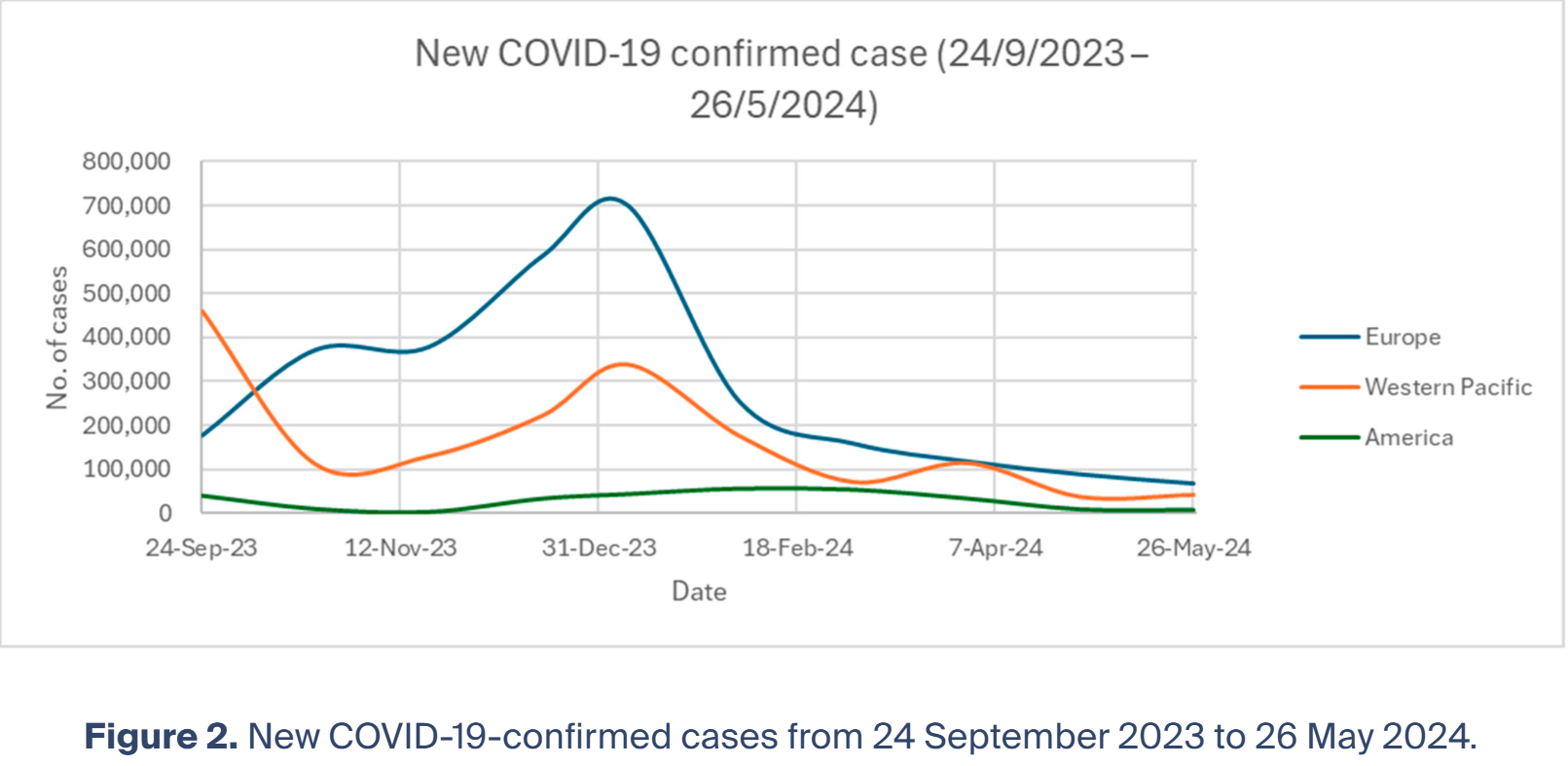
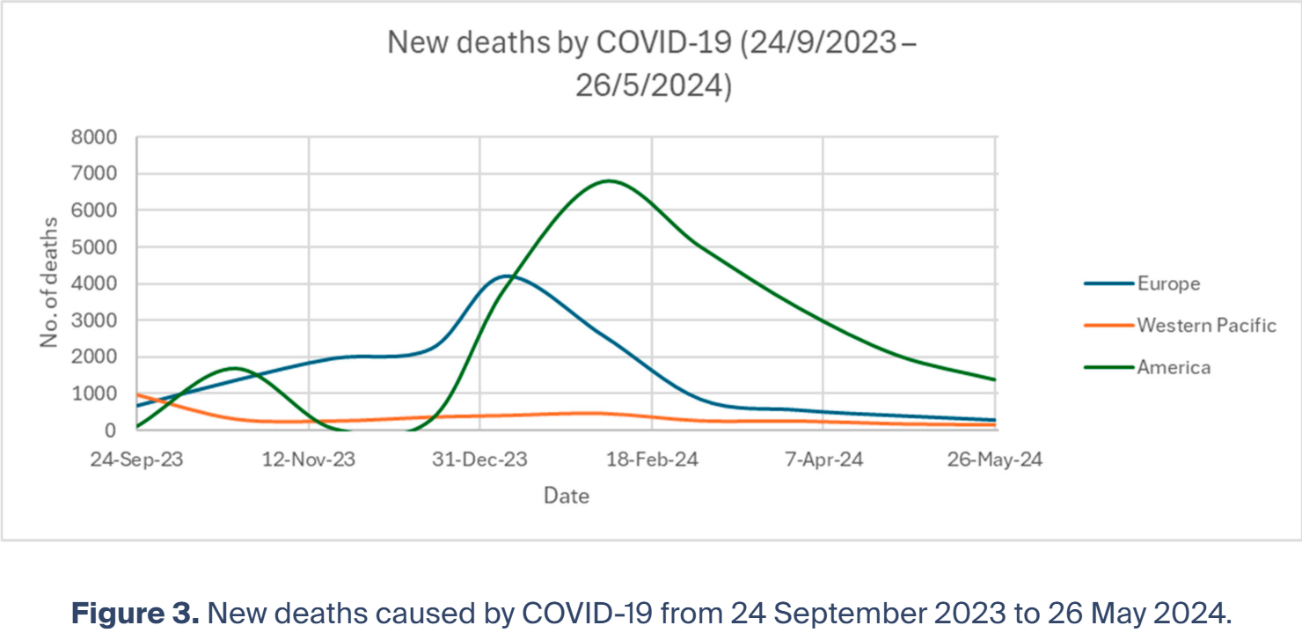
Document-supplied COVID-19 confirmed-case trends, 2023–2024.Document-supplied COVID-19 death trends, 2023–2024.
03
A macro DBTL cycle
From a needs map to the next educational iteration
Our education work follows a macro-scale Design–Build–Test–Learn cycle.
HEART-EduLOOPlisten · adapt · repeat
Select a stage to trace how community input becomes the next educational iteration.
01 Start with context
Design
Identify understanding barriers and participation conditions through scientific background, partner communication, activity settings, and accessibility needs.
Educational assets createdAudience maps, needs questions, learning goals, and communication boundaries.
02 Translate for people
Build
Translate scientific content into audience-appropriate learning tools.
Facilitate activities in hospitals, care settings, schools, campus spaces, and public cultural events.
Educational assets createdQuestions, participant-created work, choices, observations, and partner perspectives.
04 Feed insight forward
Learn
Consolidate recurring questions, material-use experiences, participant ideas, and partner suggestions.
Educational assets createdRevised communication approaches, FAQs, improved activity pacing, and reusable educational resources.
The same logic operates within individual activities. Each activity begins with a specific community and setting, uses an interaction method appropriate to that setting, and creates space for participants to express questions, interpretations, or preferences. We do not treat the number of activities as educational impact in itself. What matters is whether an activity enables people to ask, create, question, and take part in public conversations around synthetic biology.
Activity index
Follow the branches of the HEART-Edu tree
The programme documents 24 engagement entries across three communities. Twenty-three are implemented activities; Gene Wars is an in-development game-based outreach initiative. Select any leaf to jump to its field note.
Turning information into care that can be acted upon
Health Guardians includes people who support health-vulnerable groups, undertake caregiving responsibilities, or make important health decisions. We did not assume that these communities only needed more information. They needed materials, pacing, and interactions that could fit everyday care. Our activities therefore began in concrete settings—maternity wards, waiting rooms, postpartum-care centers, kindergartens, and eldercare facilities—where scientific information could become understandable, discussable, and portable.
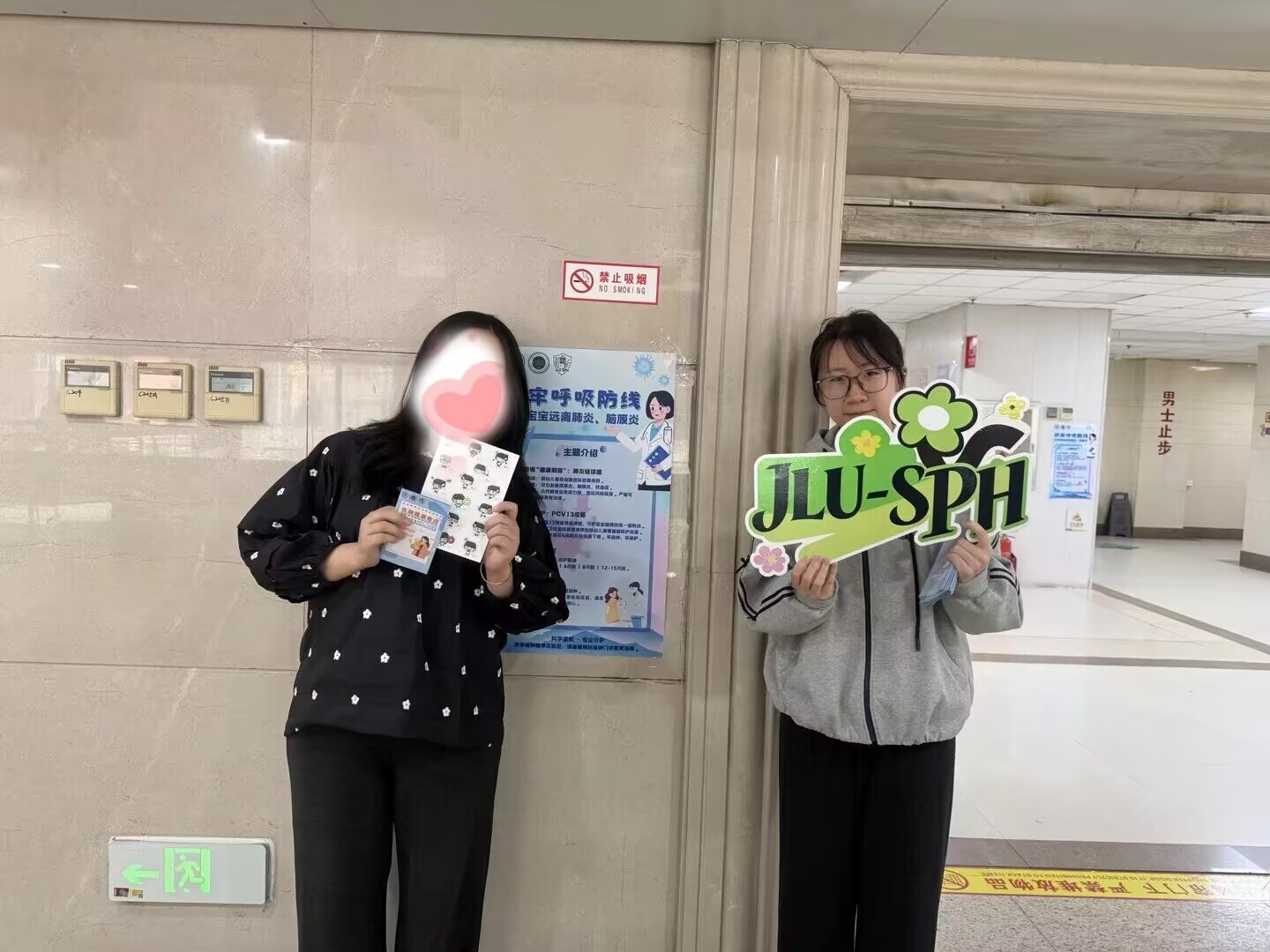
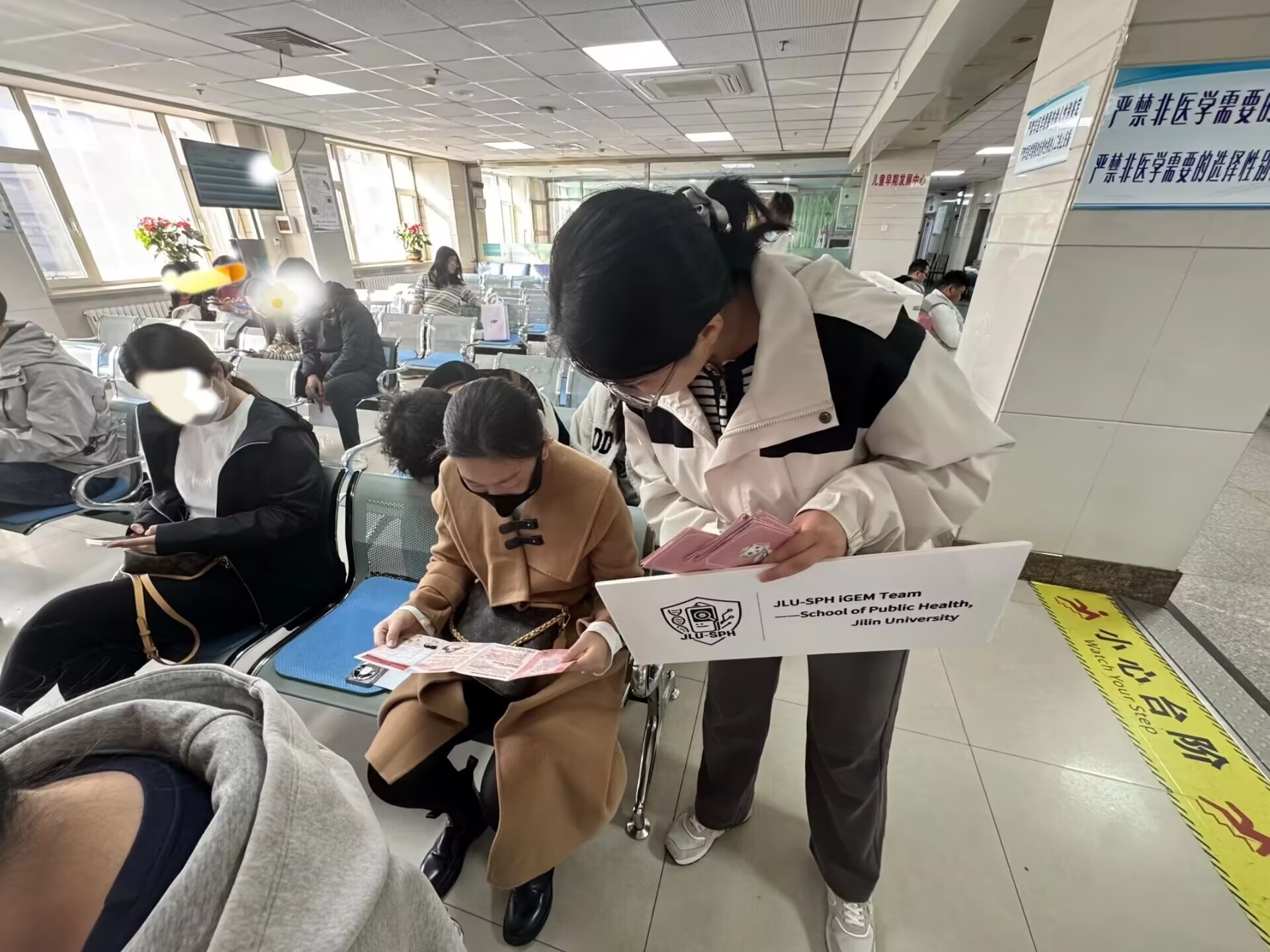
Hospital outreach and health-information materials3 photos · Click to enlarge
We used concise leaflets, small posters, and one-to-one conversations to support new parents in understanding basic links between infant respiratory health and pneumococcal disease. Materials were organized around three practical questions: why the issue deserves attention, what everyday protective measures look like, and when professional advice should be sought. We intentionally avoided overly technical language.
Parents’ questions in ward and outpatient settings became part of the interaction. They highlighted that communication for infant caregivers must be both scientifically accurate and sensitive to the fragmented reading time and emotional pressure of early care. The leaflet, poster, and activity plan form the basis of a lightweight communication format for comparable settings.
Health conversations in the prenatal waiting area3 photos · Click to enlarge
H08Care in action
Expectant mothers: “A First Safety Radar for Your Baby” waiting-room micro-engagement
March 28, Changchun Maternity Hospital
Pregnancy waiting rooms are information-dense spaces with limited dwell time and substantial privacy needs. We used audio, leaflets, QR codes, and an anonymous message channel to open a low-disruption conversation about family respiratory health, testing concepts, and newborn-care concerns.
The format was designed to respect the waiting-room environment. Anonymous messages gave participants a way to raise concerns about household transmission, testing convenience, caregiving arrangements, and privacy. These questions helped us understand how people interpret health technologies within family decision-making. The activity’s leaflet, audio content, and interaction design form a reusable framework for health communication in waiting-room settings.
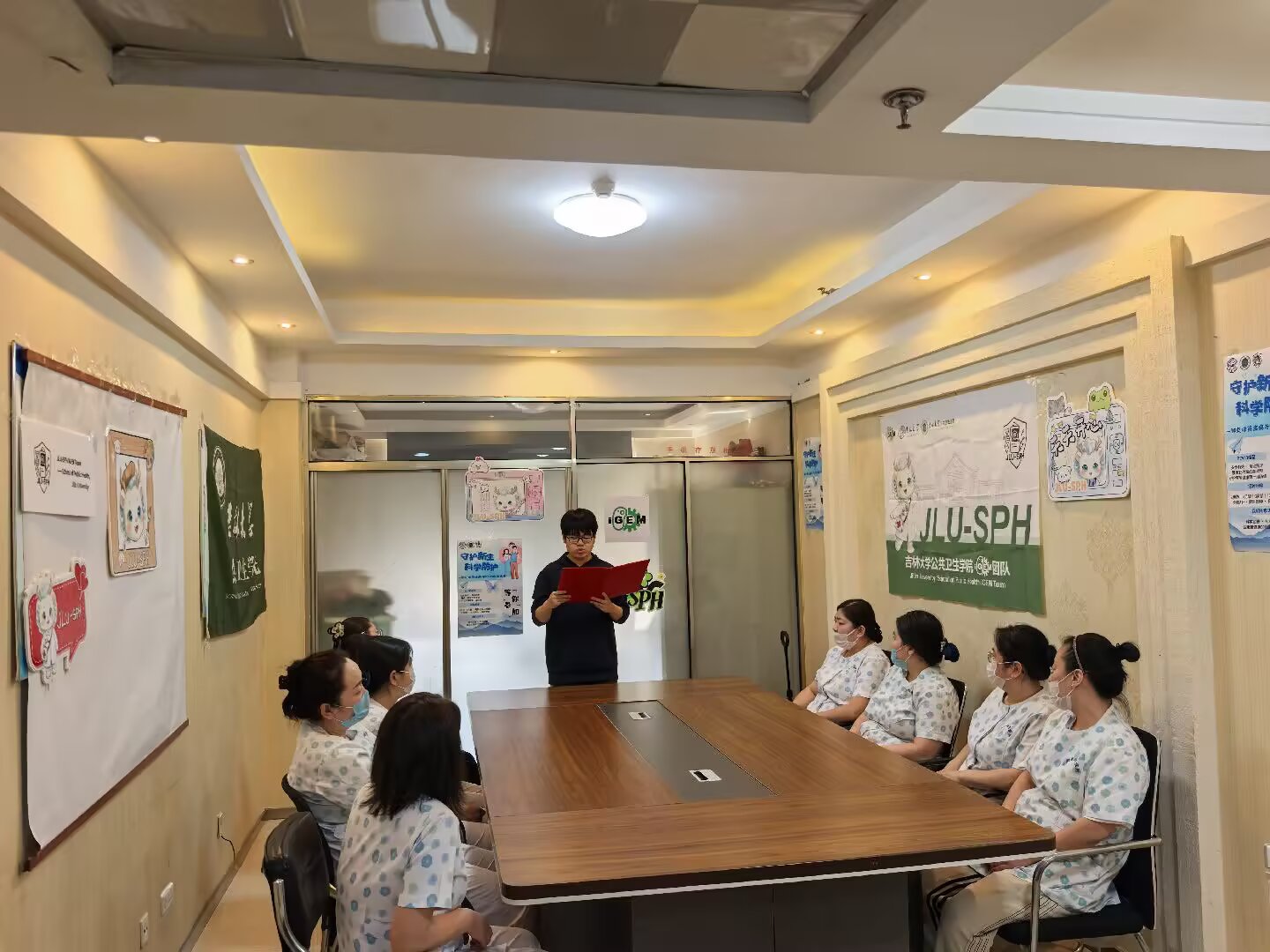
A mini-class for postpartum-care staff4 photos · Click to enlarge
Postpartum-care staff often occupy an important communication position between newborn families and health information. We held a mini-class using illustrated materials, knowledge questions, and scenario-based discussion to translate pneumococcal-health content into language that could be used in care conversations.
The activity placed abstract information within situations such as parent questions, newborn care, and health reminders. Participants raised specific questions about special infant-care situations and parent concerns, allowing the discussion to move from general information to concrete communication scenarios. In the activity record, average knowledge-test scores increased from 40 before the session to 90 afterward. We treat this change as one indicator of learning rather than as a complete measure of communication quality; it also highlights the value of developing scenario-based response cards for recurring questions.
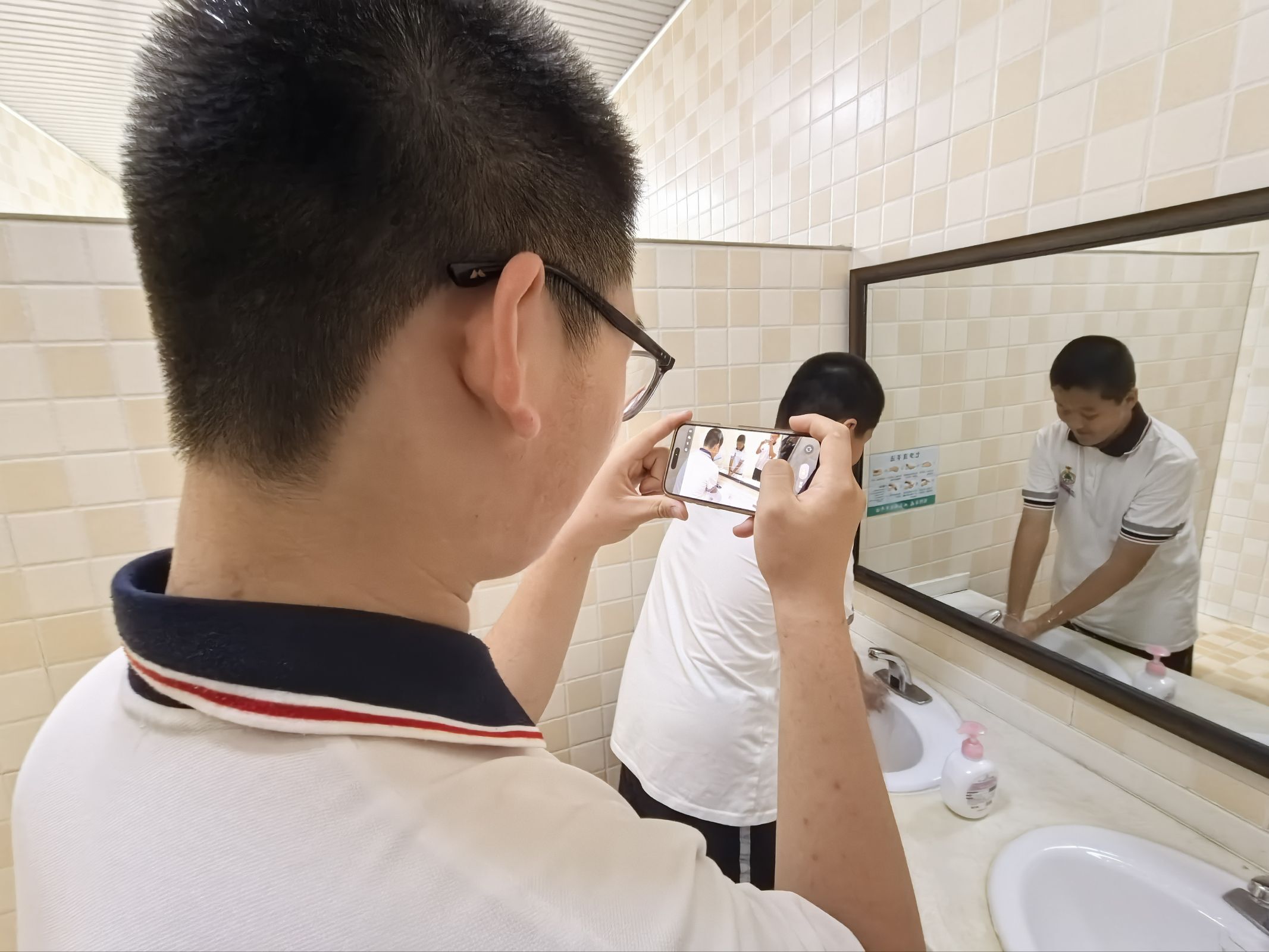
Learning hand hygiene through classroom participation3 photos · Click to enlarge
H03Care in action
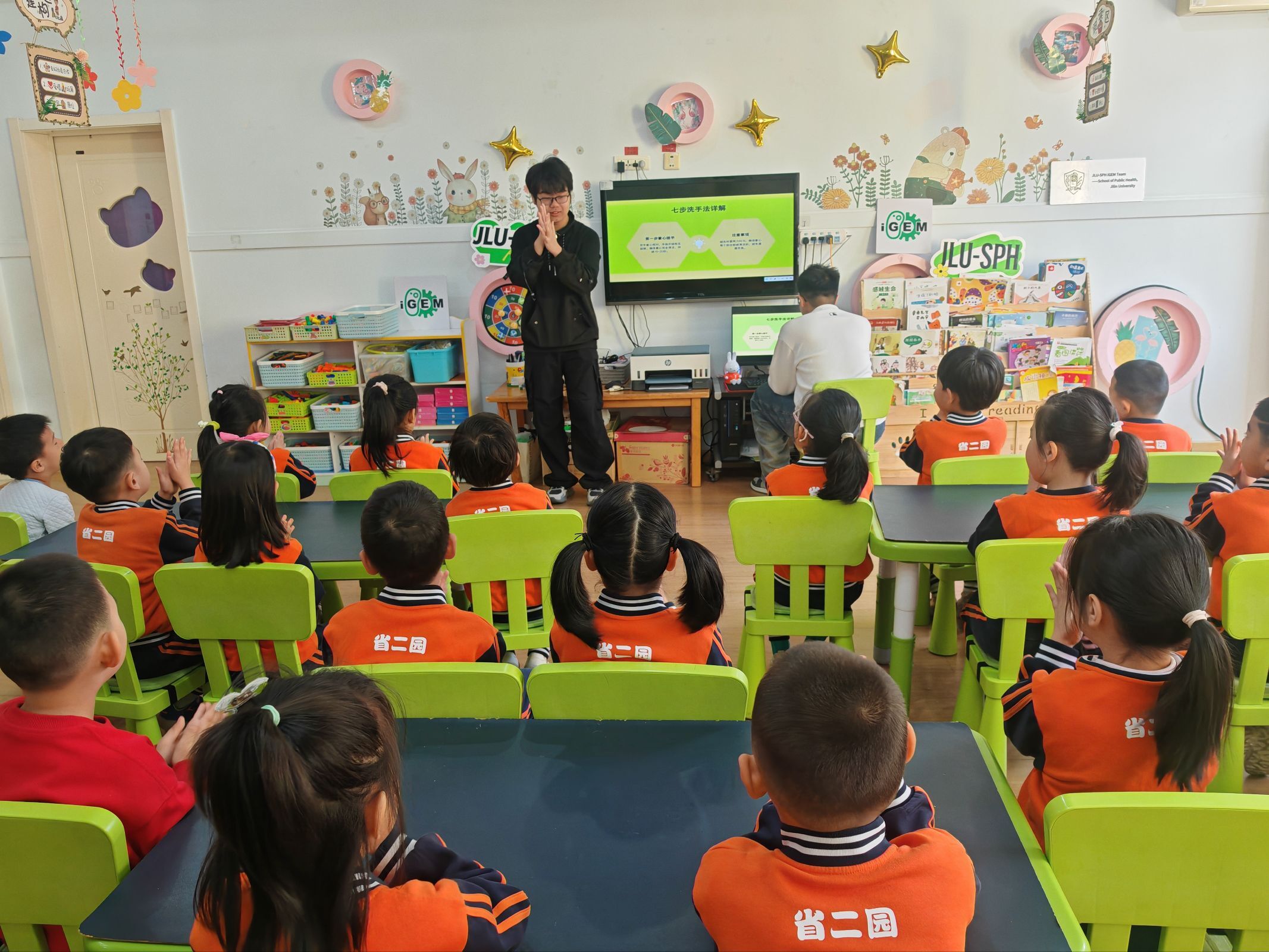
Children aged 3–5: seven-step handwashing education
April 27, Jilin Provincial No. 2 Kindergarten
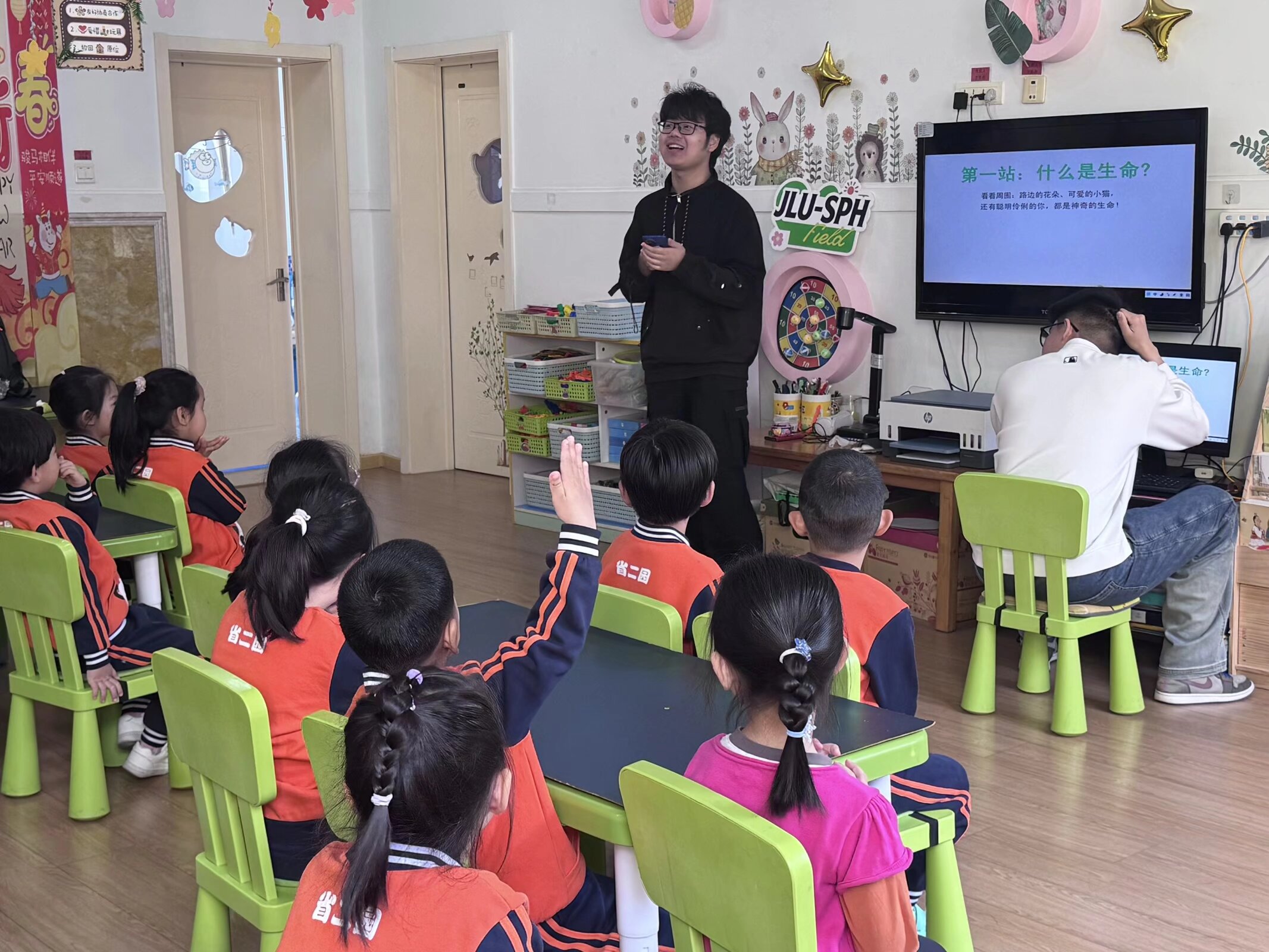
At Jilin Provincial No. 2 Kindergarten, we used a cartoon “germ” story, child-friendly slides, a movement mnemonic, and step-by-step imitation to introduce the seven-step handwashing method. The activity translated invisible microbes into characters and movements that young children could recognize and practice.
Our goal was not to introduce complex technical terminology. It was to help children be willing to wash their hands, complete the steps, and recognize basic moments when handwashing matters. We used demonstration, repetition, peer reminders, and individual support. In our activity record, more than 80% of participating children completed the steps independently. The activity also showed the value of identifying steps that children most often omit and incorporating them more clearly into future visual and movement-based reinforcement.
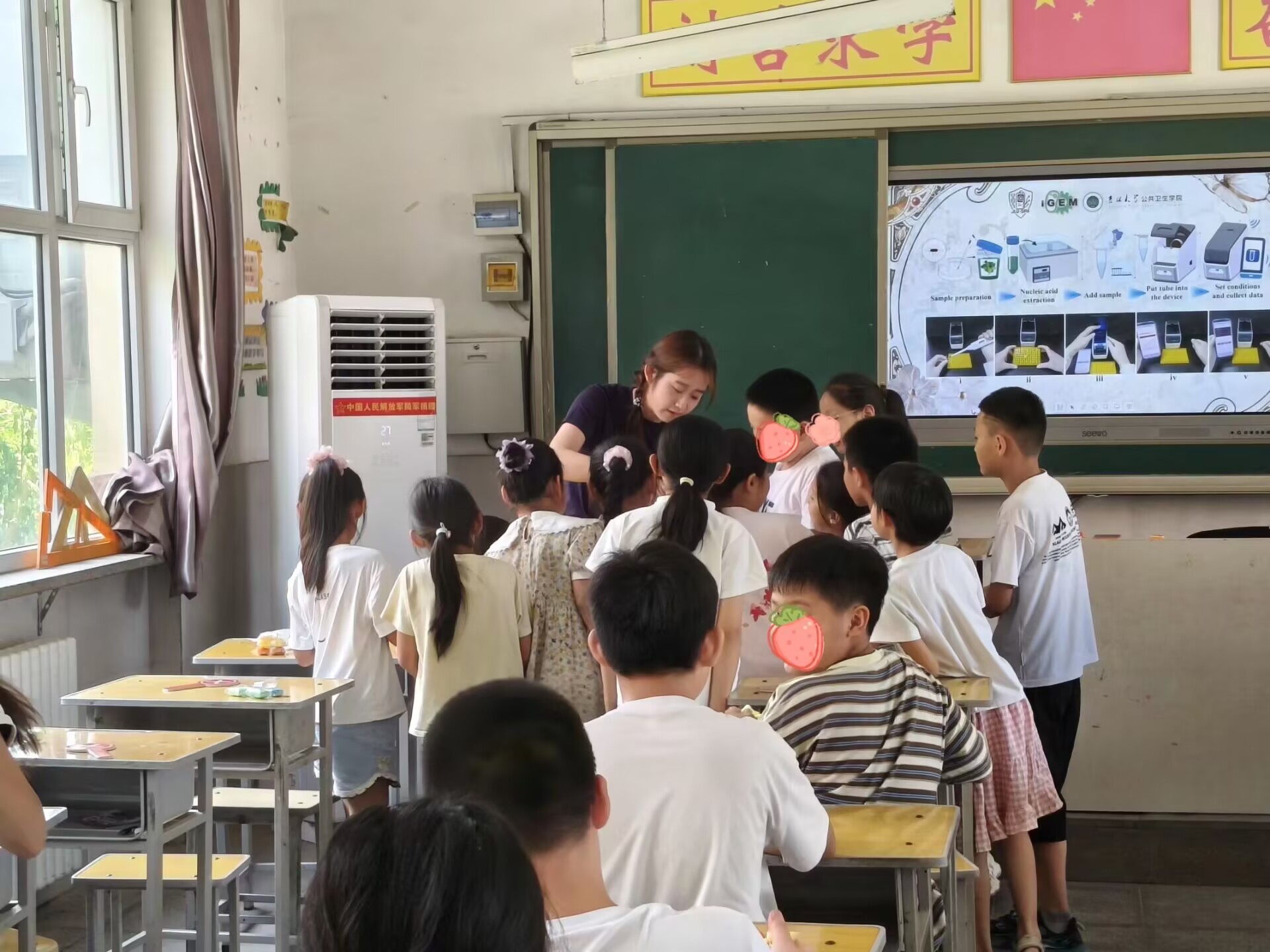
Making and sharing modular clay creations4 photos · Click to enlarge
H04Care in action
Young children: modular clay workshop
April 27, Jilin Provincial No. 2 Kindergarten
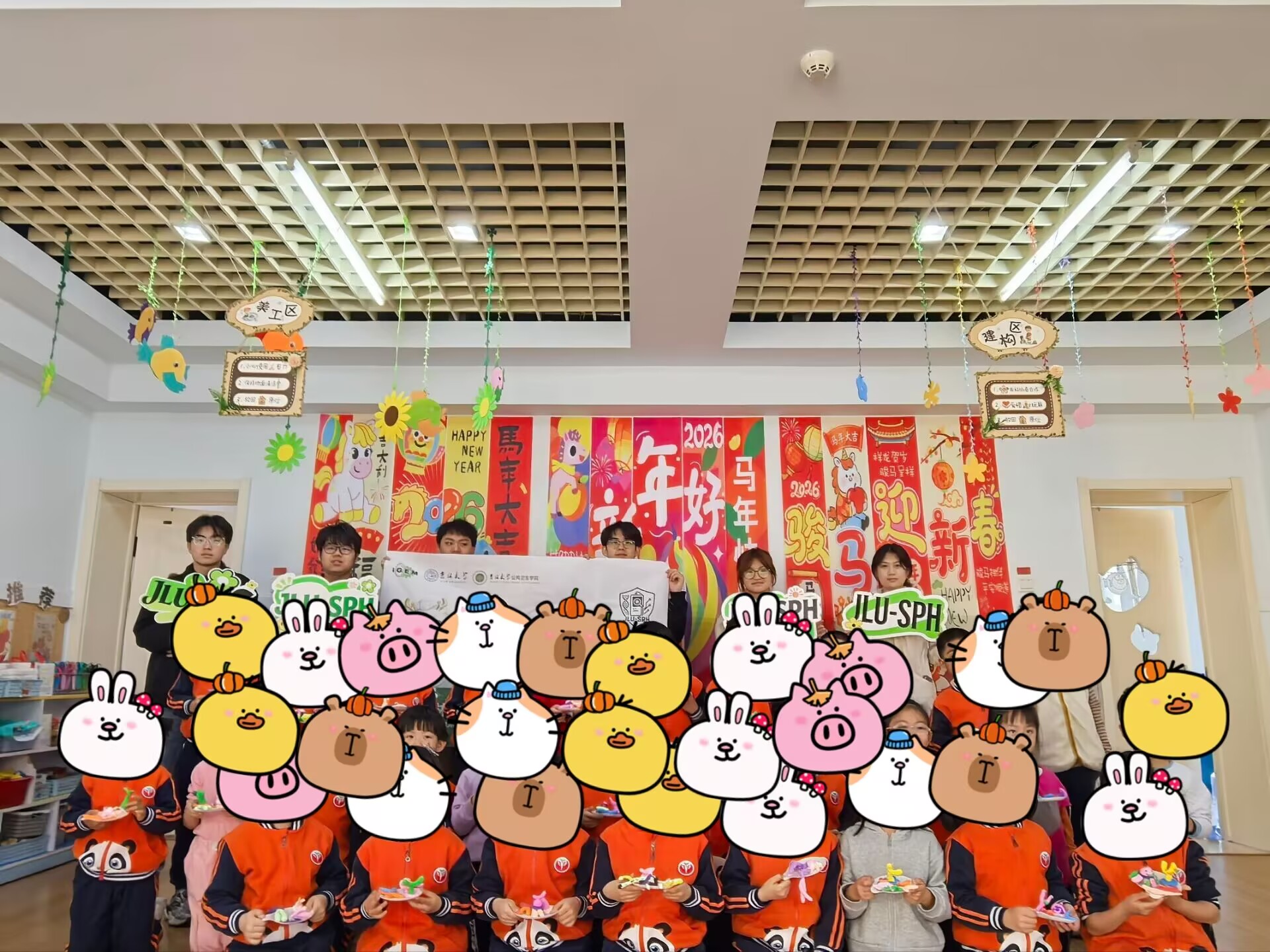
Phages, antibodies, and functional enzymes are difficult for young children to understand through language alone. In this workshop, different biological components became clay modules that children could make, display, and discuss. Color, shape, and combination provided an initial bridge between structure and function.
The workshop began with safety agreements, followed by step-by-step instruction, demonstration models, and sharing. Children’s creations became a way to express their understanding and to identify which analogies were helpful and which concepts needed clearer explanation. Most children completed three types of models and attempted to explain their work to peers.
Exploring the ideas behind biological building blocks3 photos · Click to enlarge
H05Care in action
Young children: “Magic Bio-Bricks”
April 27, Jilin Provincial No. 2 Kindergarten
“Magic Bio-Bricks” used children’s familiarity with building toys to introduce basic ideas about DNA, genetic components, and synthetic biology. We used concrete expressions such as “the instruction book of life” and “bio-chefs” to explain that scientists can combine components to explore new functions.
Children transformed their own ideas about health, the environment, and future life into creative proposals. They were able to repeat the DNA analogy and proposed ideas such as air purification and waste treatment. We also made the boundary of the analogy explicit: imagination can begin scientific exploration, but real applications still require validation, safety assessment, and long-term research.
One-to-one health conversations with older adults3 photos · Click to enlarge
H06Care in action
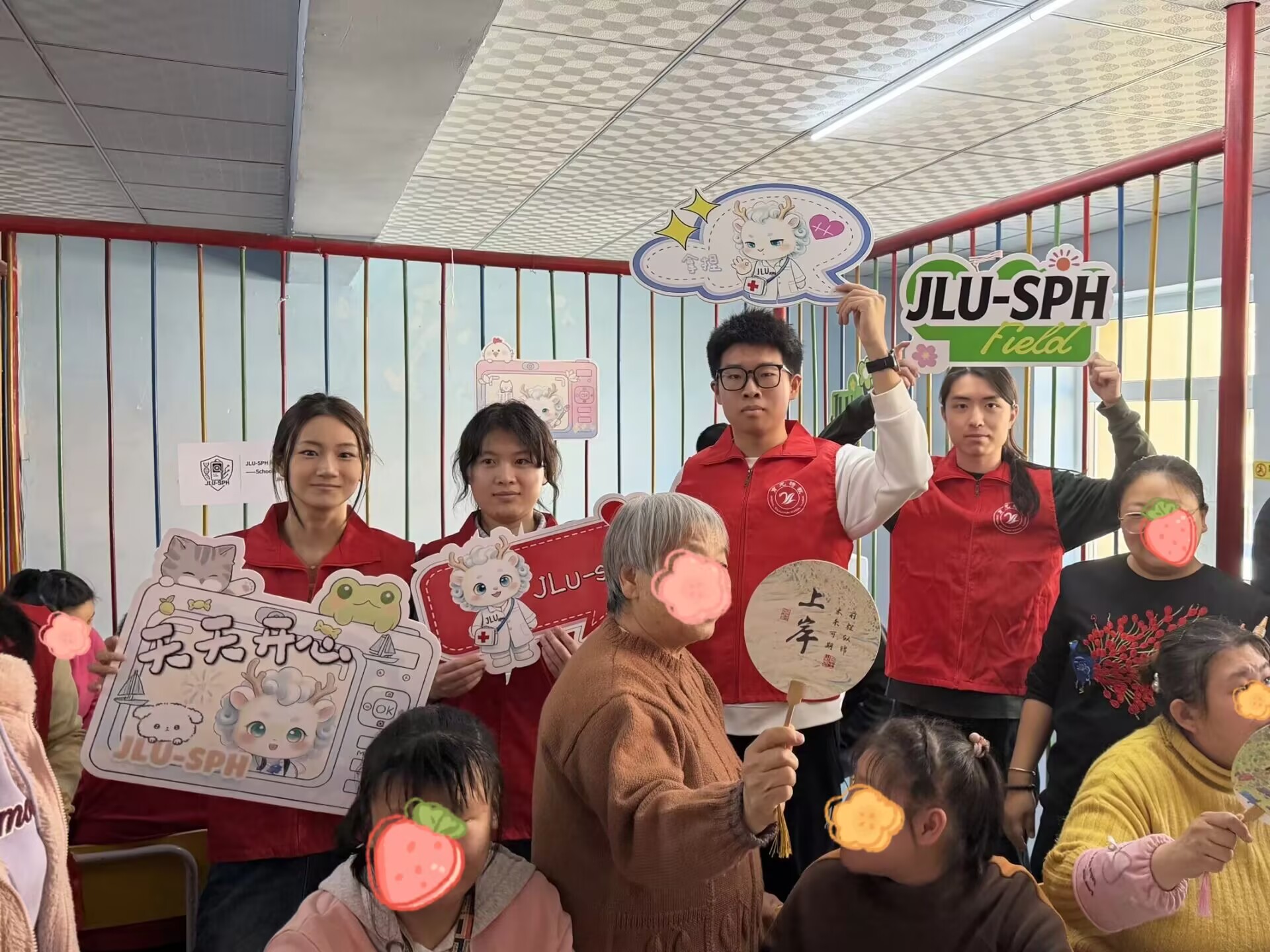
Older adults: visible protection
April 10, Zhiai Eldercare Medical Facility
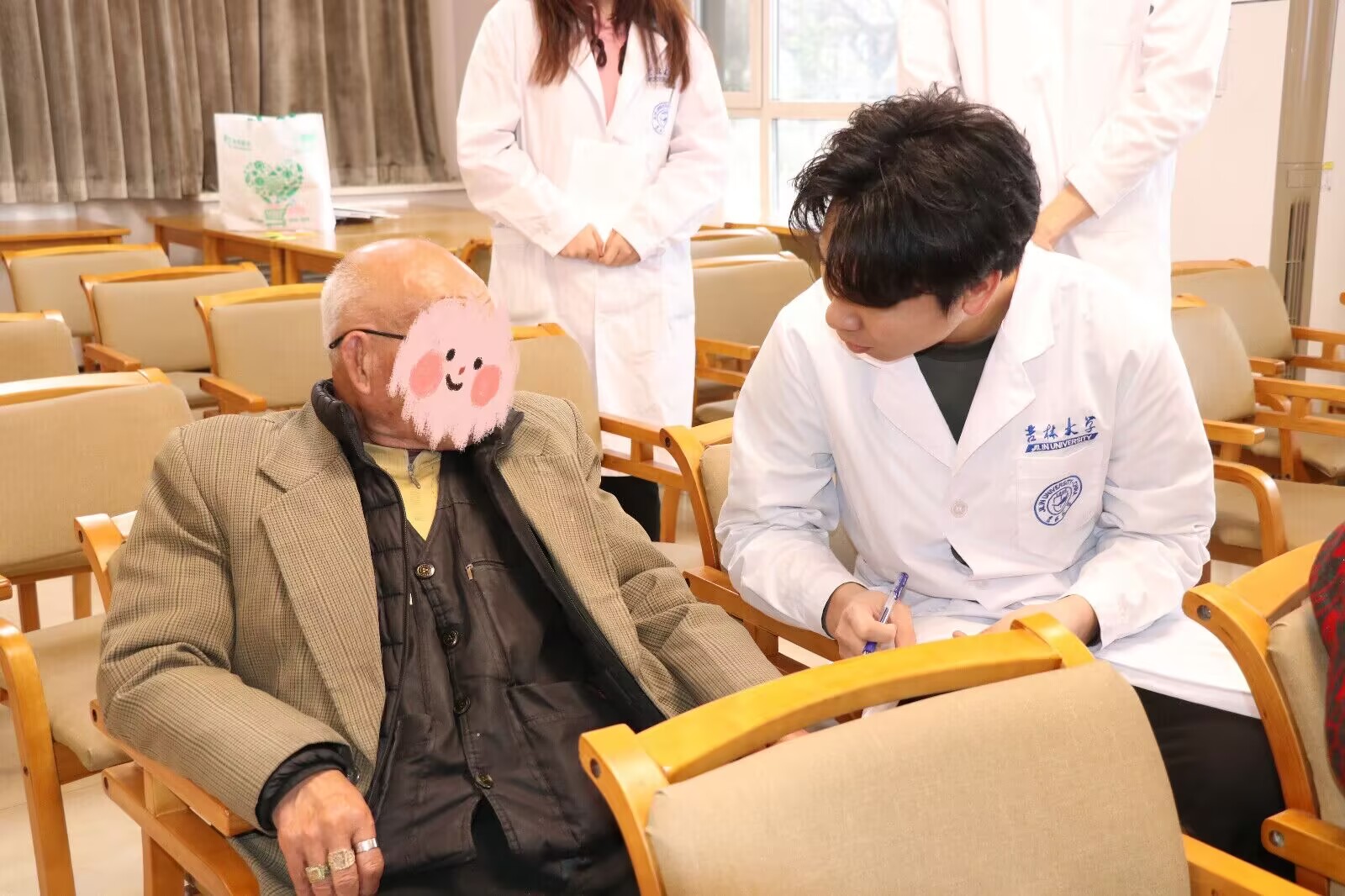
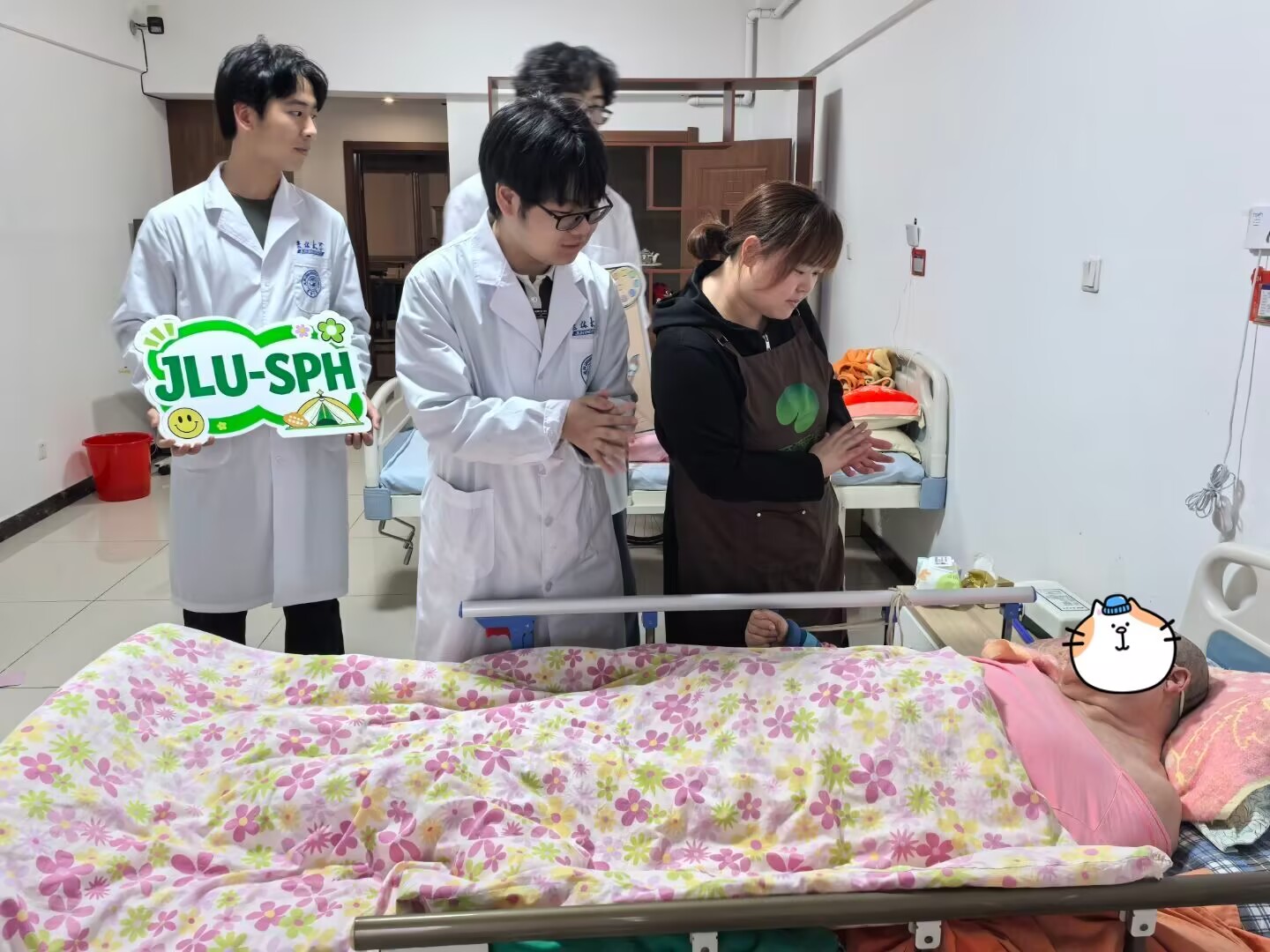
At Zhiai Eldercare Medical Facility, we used large-font, high-contrast slides, paced explanations, and one-to-one conversation. The activity combined group communication in a common room with supported conversations for people with reduced mobility, making information easier to read, hear, and revisit.
Postcard writing and assisted writing created a route for health information to enter family communication. The team supported the completion and collection of 60 postcards. We do not interpret postcards as a direct measure of knowledge mastery; instead, they illustrate emotional participation and suggest that readability, emotional expression, and health understanding should be considered separately in future evaluation.
Practical health communication in the care setting3 photos · Click to enlarge
H07Care in action
Eldercare staff: essential protective-practice training
April 10, Zhiai Eldercare Medical Facility
Eldercare staff help maintain the everyday health environment of older adults. We used concise slides, care scenarios, demonstrations, and a commitment form to translate hand hygiene, ventilation, cleaning, and record-keeping into protective practices that could be discussed within daily work routines.
The session connected general principles with practical questions such as winter ventilation, care schedules, and communication pressure. In the activity record, recognition of four protective-practice points increased from 35% to 95%. Future evaluation should complement knowledge questions with observable practice checklists and follow-up conversations about which practices are most difficult to sustain in real care settings.
05
Part II · Biotech Explorers
Making curiosity an entry point to synthetic biology
Biotech Explorers includes learners with different ages, backgrounds, and reasons for participating. We did not position them as passive recipients of knowledge. Through drawing, visual storytelling, competitions, design, career discussion, public booths, and voting interactions, they could become questioners, narrators, creators, and contributors of perspectives. These activities introduced synthetic biology and its potential relevance to respiratory health while also addressing conditions of use, limits, and public questions.
B01–B03
Primary-school and rural children
Use drawing, online stories, and rural-school outreach to enter life science through observation, expression, and everyday experience.
B04–B05
Middle-school students
Use visual storytelling and creative design to turn health topics into questions that can be discussed and expressed.
B06–B08
High-school students
Connect synthetic biology, iGEM, and sustainable science-and-innovation pathways through quizzes, careers discussion, and homecoming outreach.
B09–B10
University students
Use student-community settings and dormitory interaction to lower the threshold for peer discussion of synthetic biology.
B11–B14
Public audiences
Use a health run, a cultural festival, public voting, and game-based content to discuss technological boundaries and public choices.
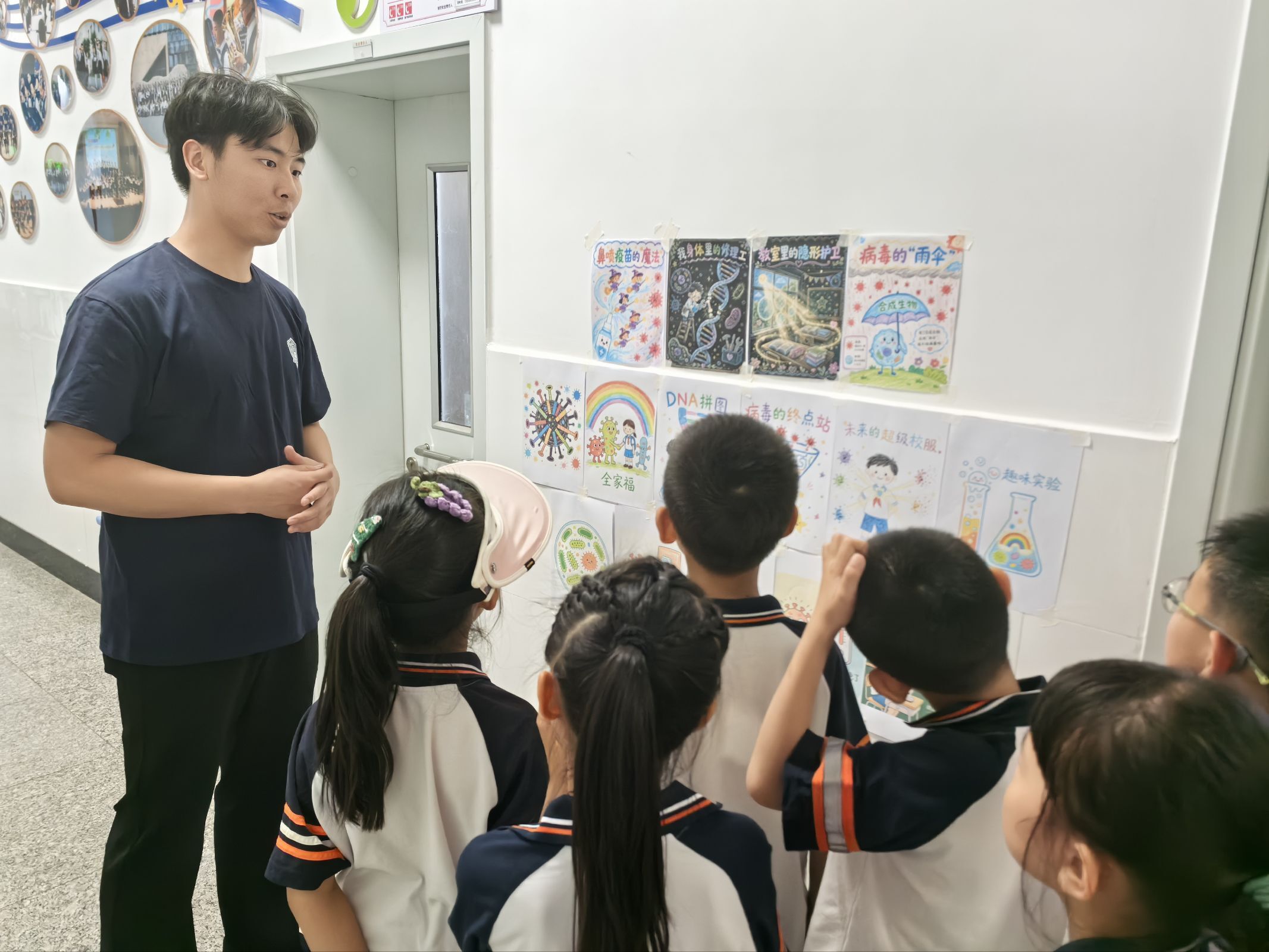
Student posters become a starting point for discussion3 photos · Click to enlarge
B01Curiosity in motion
Primary-school students: “The Science Code of Breathing” science-poster showcase
June 2, Primary Division of Jilin Provincial No. 2 Experimental School
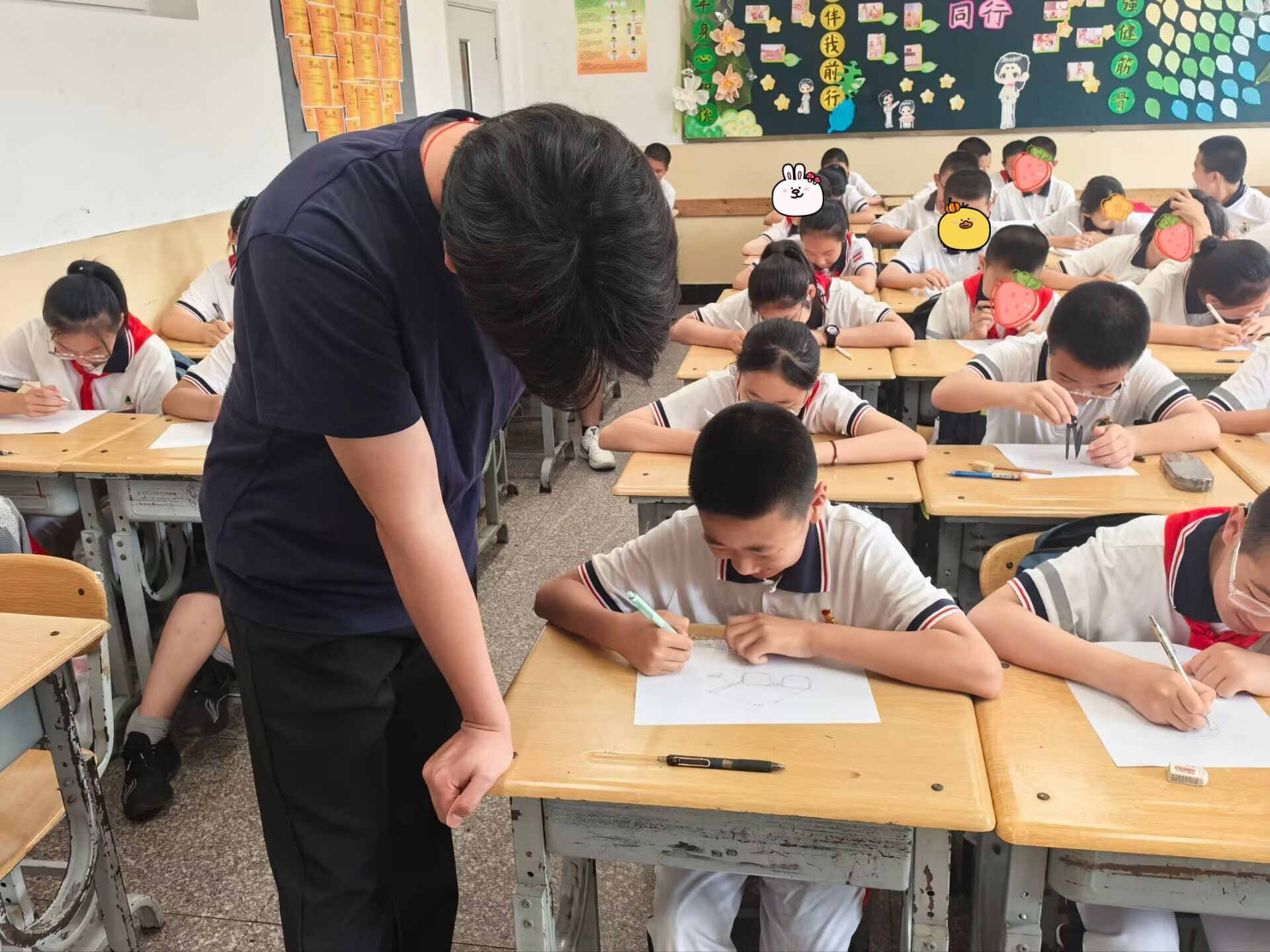
We organized respiratory-health education through student-created science posters and a school showcase. Students translated protective practices, pathogen-detection ideas, and their own understanding into visual work. The posters then became starting points for peer discussion.
Drawing allowed children to express their existing understanding before comparing it with others’ work. Teachers observed that creative drawing and public display were more engaging for younger students than a conventional lecture. The creation guide, age-appropriate science visuals, and activity plan can be adapted for school-based outreach.
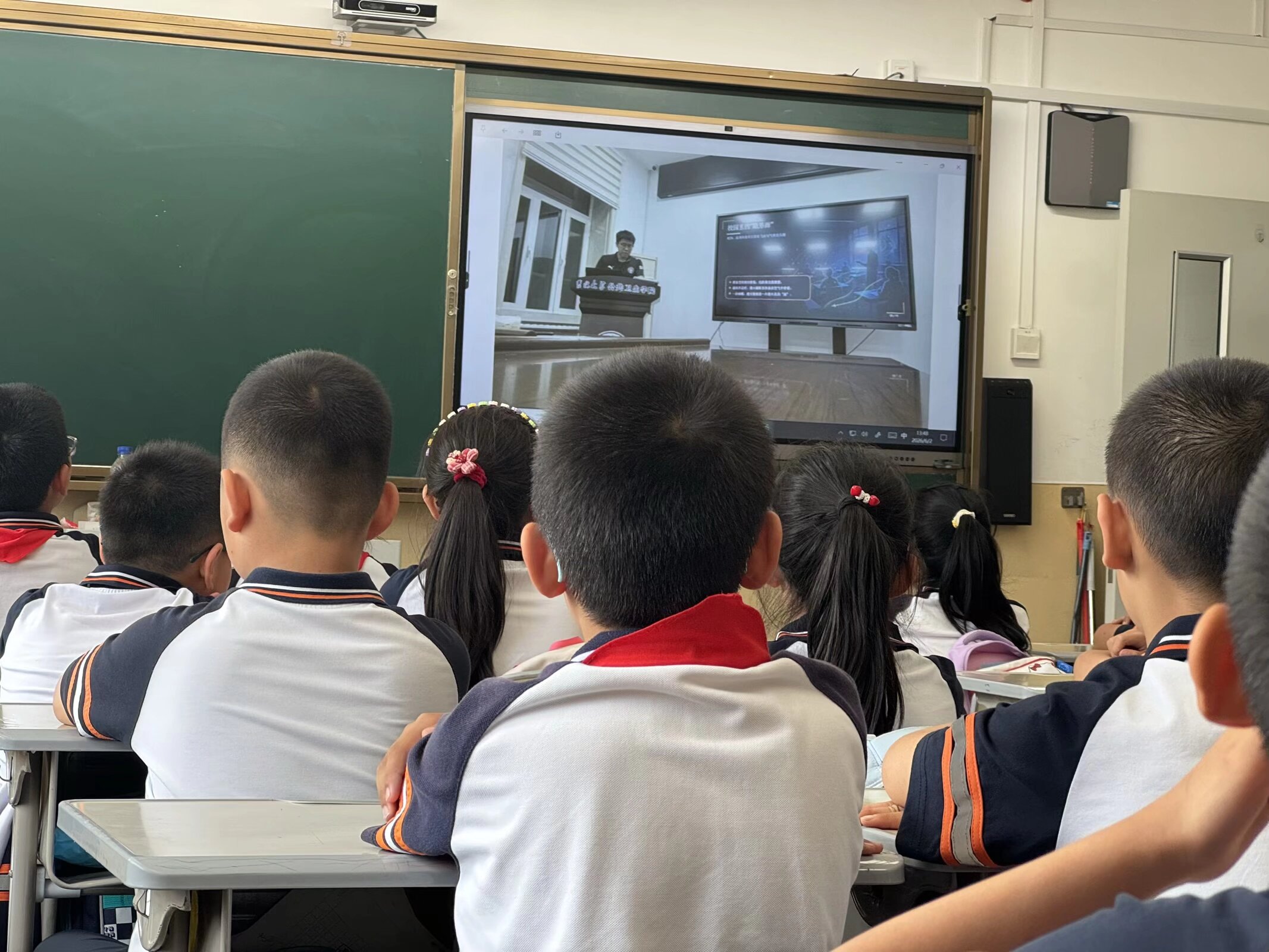
Joining the Respiration Lab online class3 photos · Click to enlarge
B02Curiosity in motion
Primary-school students: “Respiration Lab” online class
June 2, Primary Division of Jilin Provincial No. 2 Experimental School
This online class used “the microscopic battlefield of breathing” to connect pathogens, biosensors, and scientific exploration in a form appropriate for primary-school students. Everyday analogies, animation, open questions, and creative follow-up tasks lowered the barrier created by abstract concepts in an online setting.
The class encouraged learners to connect science with daily observation through questions and creative tasks. Students shared ideas after the session and expressed interest in similar classes. The team used recurring questions to consider shorter modules and clearer explanation of what technologies can—and cannot—do.
Science outreach at Ge Gong Primary School4 photos · Click to enlarge
July 17, Ge Gong Primary School, Qijiazuo Township, Tang County, Hebei
At Ge Gong Primary School, we connected stories of local medical heritage with contemporary life-science education. Local history provided an entry point, after which child-friendly language introduced pathogen detection, basic protection, and scientific exploration in synthetic biology.
The value of this activity came from locally grounded storytelling rather than from simply adding more scientific facts. By placing medical dedication, health knowledge, and scientific imagination in the same conversation, we invited children to see that science is not confined to textbooks; it is also connected to real stories about protecting life.
Students tell health stories through the camera3 photos · Click to enlarge
B04Curiosity in motion
Middle-school students: “Life and Health Through the Lens”
June 2, Middle Division of Jilin Provincial No. 2 Experimental School
“Life and Health Through the Lens” invited middle-school students to use photography and captions to express their observations of natural life, everyday protection, and technological development. Through framing, photography, and narration, students considered what deserves to be seen and how feelings about health and life can become communicable work.
Students worked in groups on framing, photography, captions, and editing, then shared and discussed their work offline. Visual storytelling created a route into science communication that differed from classroom explanation and required participants to consider expression, accuracy, privacy, and public presentation. Storyboard templates, theme copy, and the activity plan are available as educational materials.
Turning detection ideas into student designs3 photos · Click to enlarge
June 2, Middle Division of Jilin Provincial No. 2 Experimental School
We began with respiratory-health situations on campus and invited students to sketch detection concepts around users, use settings, and information needs. Examples included stationery-like, wearable, and digital concepts. The workshop emphasized a design process: identifying needs, proposing hypotheses, drawing ideas, and improving them through exchange.
The purpose was not to ask students to produce immediately commercializable devices. It was to let them experience how science and engineering can respond to real people’s needs. Student work showed attention to usability for younger children and older adults, highlighting the value of user-centered discussion in science education.
Synthetic-biology concepts, questions, and discussion4 photos · Click to enlarge
B06Curiosity in motion
High-school students: “Decode Life, Compete for Tomorrow” synthetic-biology quiz
May 11, Changchun Hope High School
At Changchun Hope High School, we used a quiz competition to introduce basic concepts in synthetic biology, respiratory health, and life science. Team questions, rapid-response rounds, and scenario questions supported discussion and collaboration rather than treating ranking as the endpoint.
The quiz helped students connect technical concepts with family-health settings and allowed the team to identify concepts that required clearer explanation. Question banks can be refined using recurring errors and questions, including scenario questions on technological limits, ethics, and conditions of use.
Exploring future roles in synthetic biology4 photos · Click to enlarge
B07Curiosity in motion
High-school students: synthetic-biology ecosystem and careers seminar
May 11, Changchun Hope High School
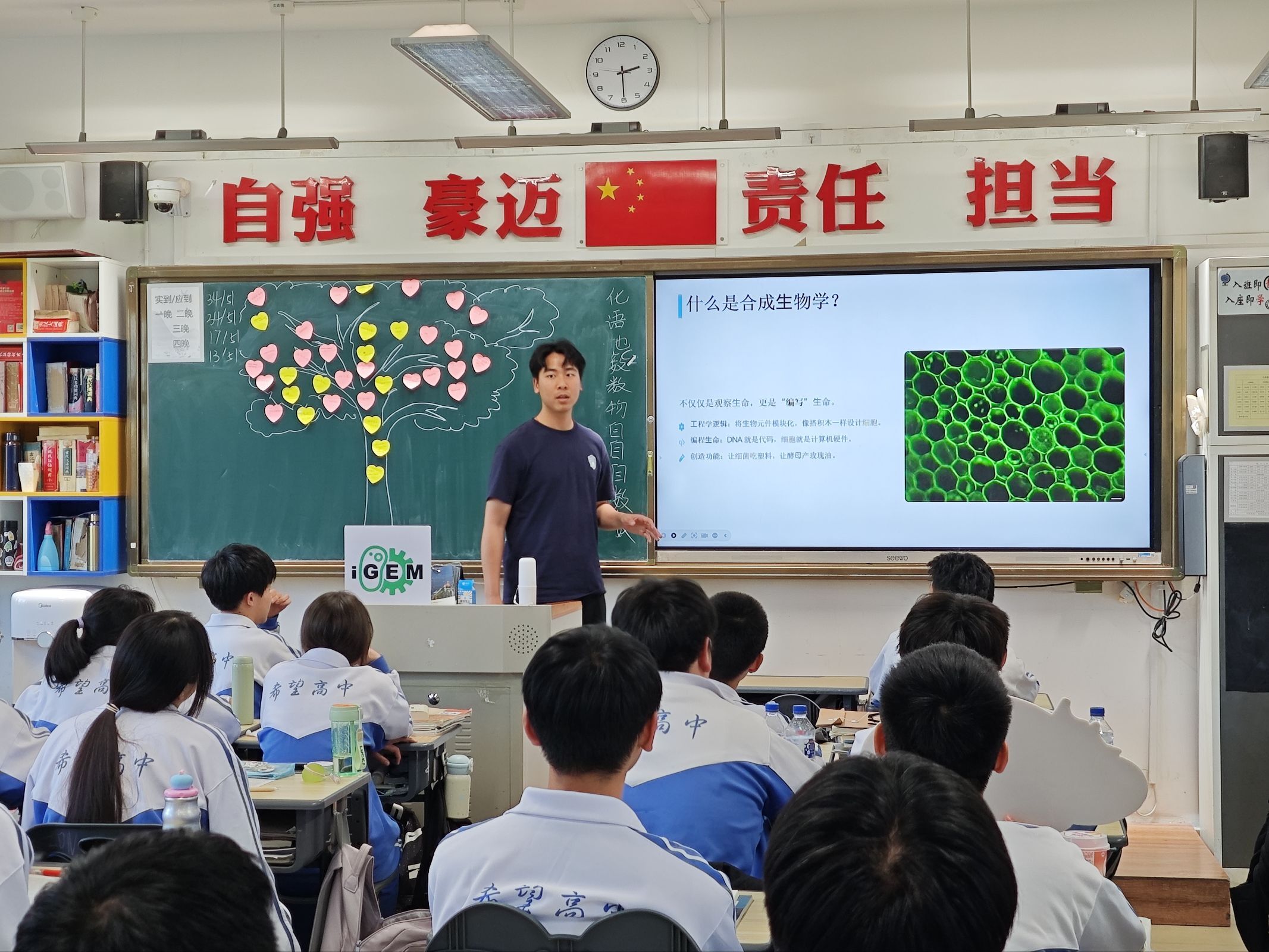
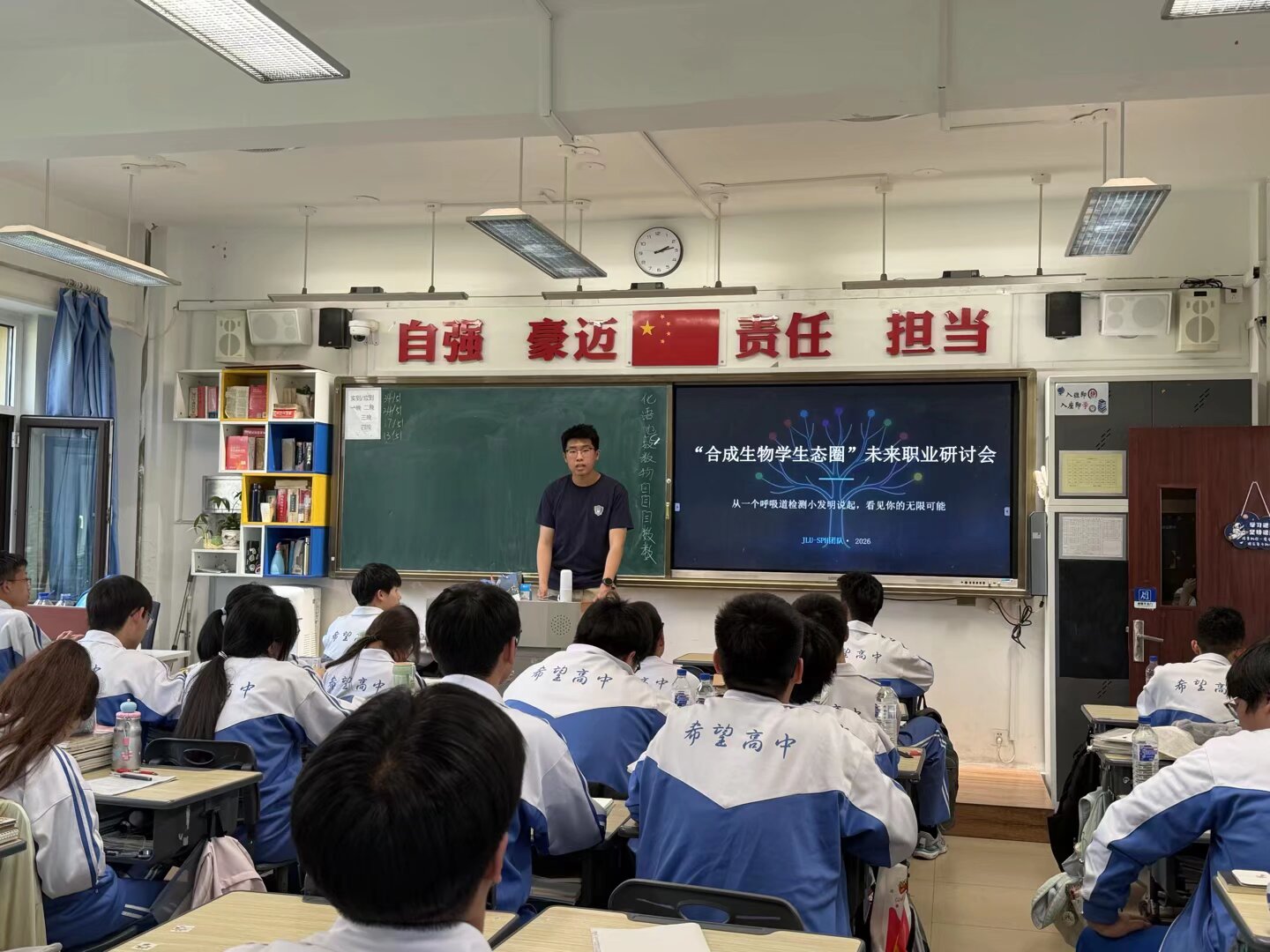
This seminar placed synthetic biology within a broader landscape of learning and careers. Students discussed how research, engineering, design, communication, regulation, bioethics, and interdisciplinary collaboration together form a synthetic-biology ecosystem.
Through roundtable sharing and a collaboratively created career ecosystem map, the session responded to the narrow idea that synthetic biology exists only in laboratories. Activity records report overall satisfaction above 90% and indicate that participants could identify at least three related career categories. The seminar materials support schools in opening conversations about science pathways that are both aspirational and actionable.
Documentation in progressB08
B08Curiosity in motion
High-school students: national homecoming outreach programme
Winter break 2026; eight partner high schools
The national homecoming outreach programme used a standardized, adaptable format to connect foundational synthetic biology, iGEM project experience, and high-school science-and-innovation exploration. Across partner schools, the programme organized three questions into a continuous learning sequence: What is synthetic biology? How can iGEM be understood? How can a student begin exploring science and innovation?
The programme used a 105-minute, four-module structure combining a slide-based introduction, interactive questions, outreach materials, and feedback collection. Its materials—including a presentation deck, process guide, speaker-training checklist, event-preparation checklist, feedback questionnaire, and debrief template—were designed to support future student-led homecoming outreach.
Peer conversations at the student-society fair4 photos · Click to enlarge
B09Curiosity in motion
University students: synthetic-biology outreach booth at the student-society fair
April 25, Jilin University Qianwei South Campus
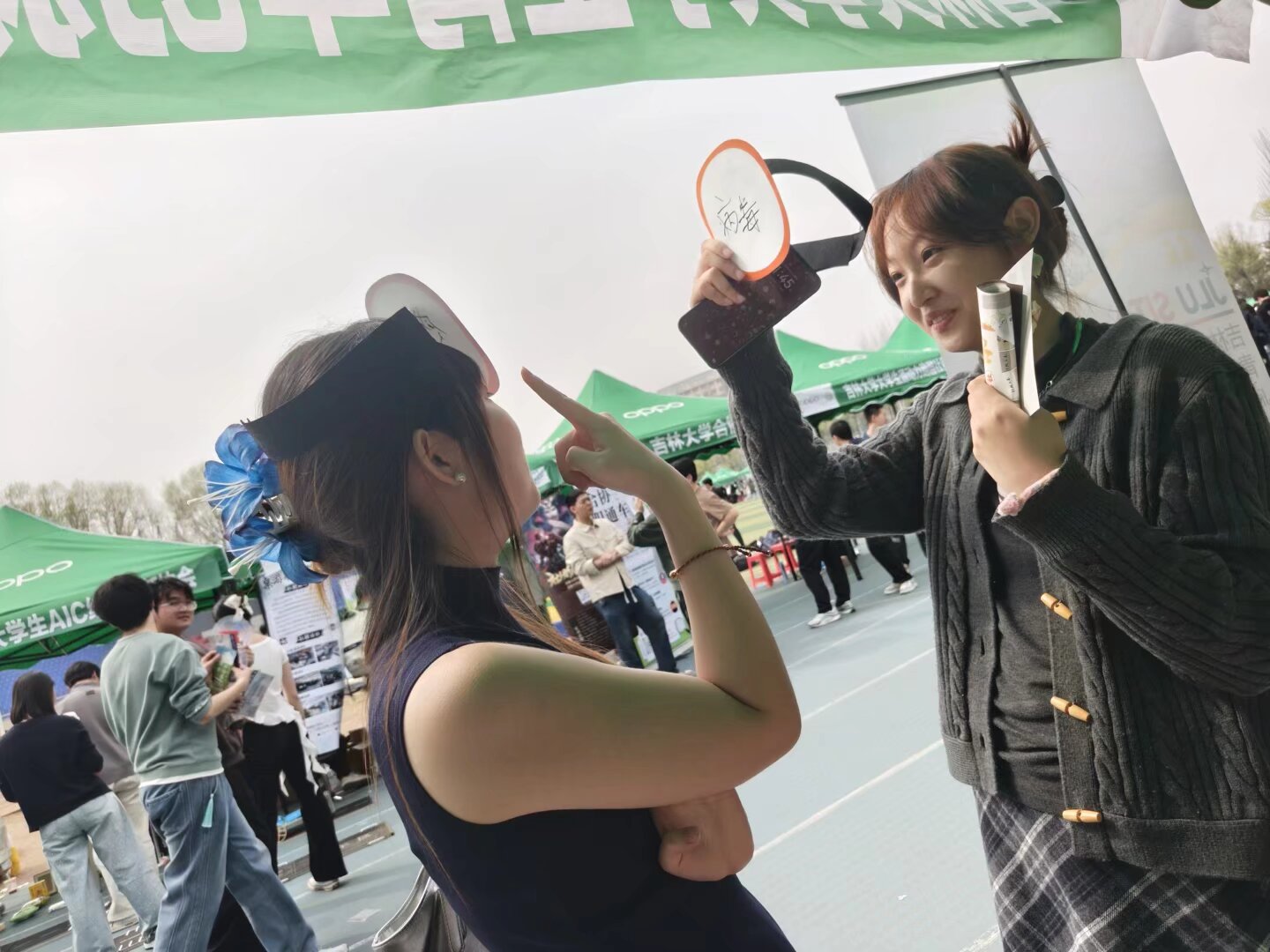
We brought synthetic biology into a familiar university student-community setting through an outreach booth at the student-society fair. Displays, a detection-device model, handouts, and conversation created an opportunity for students from different disciplines to engage with the project.
For students interested in technical innovation, we discussed interdisciplinary uses of synthetic biology. For those more concerned with everyday health, we began with shared living, respiratory protection, and practical questions. The booth reached hundreds of students across disciplines, and all distributed outreach materials were taken. This setting demonstrated that science communication can begin outside specialist courses, through low-threshold peer encounters.
Bringing science conversations to the residence hall2 photos · Click to enlarge
B10Curiosity in motion
University students: “Evening Breeze, Science for Every Breath” dormitory interaction
May 17, outside Xinmin No. 9 Residence Hall
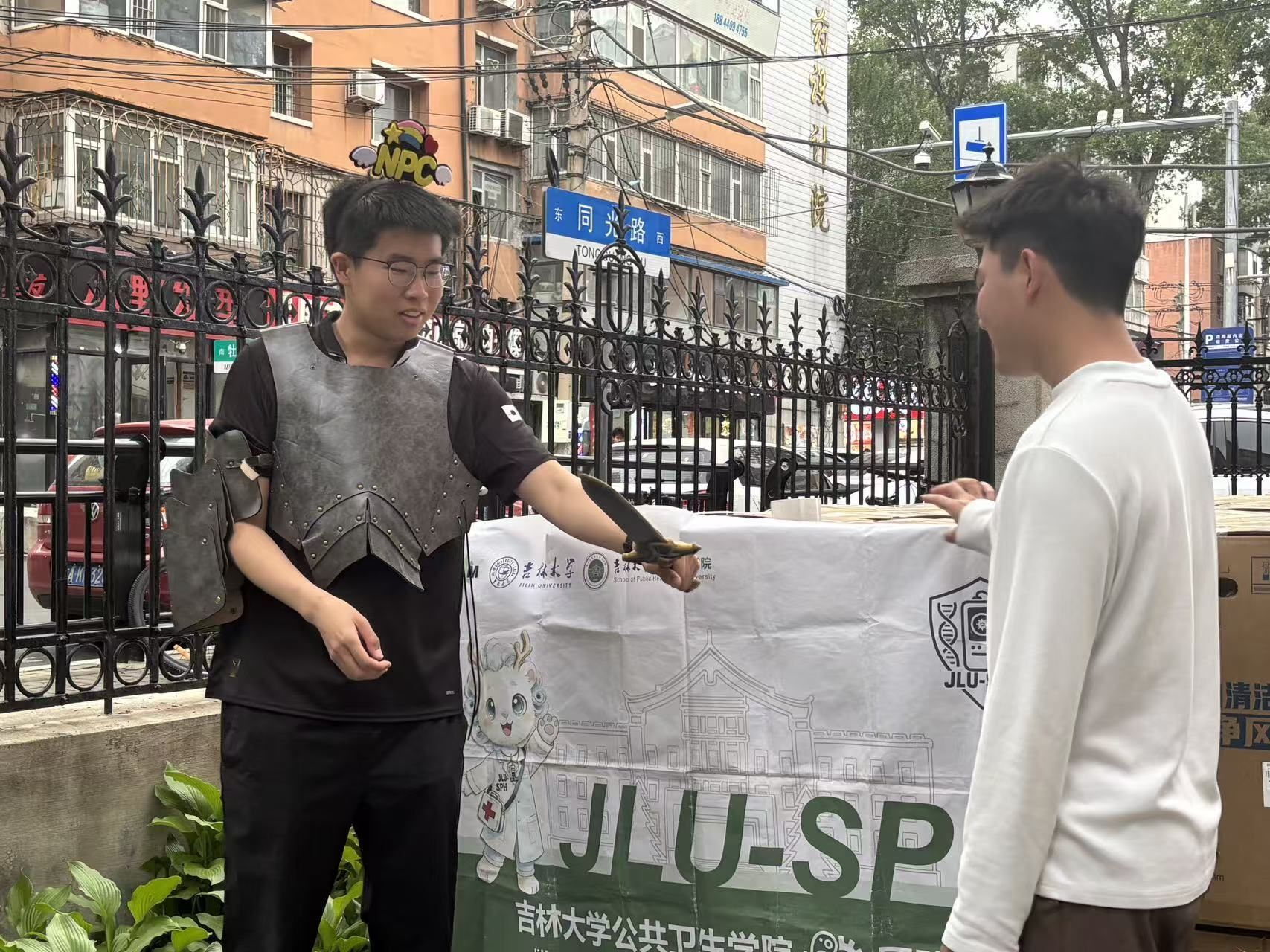
This activity used the natural pause of evening campus life to create a light, non-clinical setting for respiratory-health and synthetic-biology communication. Through situational roles, short dialogue tasks, anonymous messages, and low-pressure conversation, complex concepts became topics peers were more willing to discuss.
The activity did not medicalize students’ emotional experiences or substitute for professional psychological support. Its purpose was to create an informal entry point for questions about synthetic biology, dormitory ventilation, and respiratory health. Some students asked about detection principles and possible use settings, showing how everyday settings can open scientific dialogue.
Respiratory-health outreach alongside the campus run4 photos · Click to enlarge
B11Curiosity in motion
Public audiences: respiratory-health outreach at the campus health run
May 1, Jilin University Qianwei South Campus
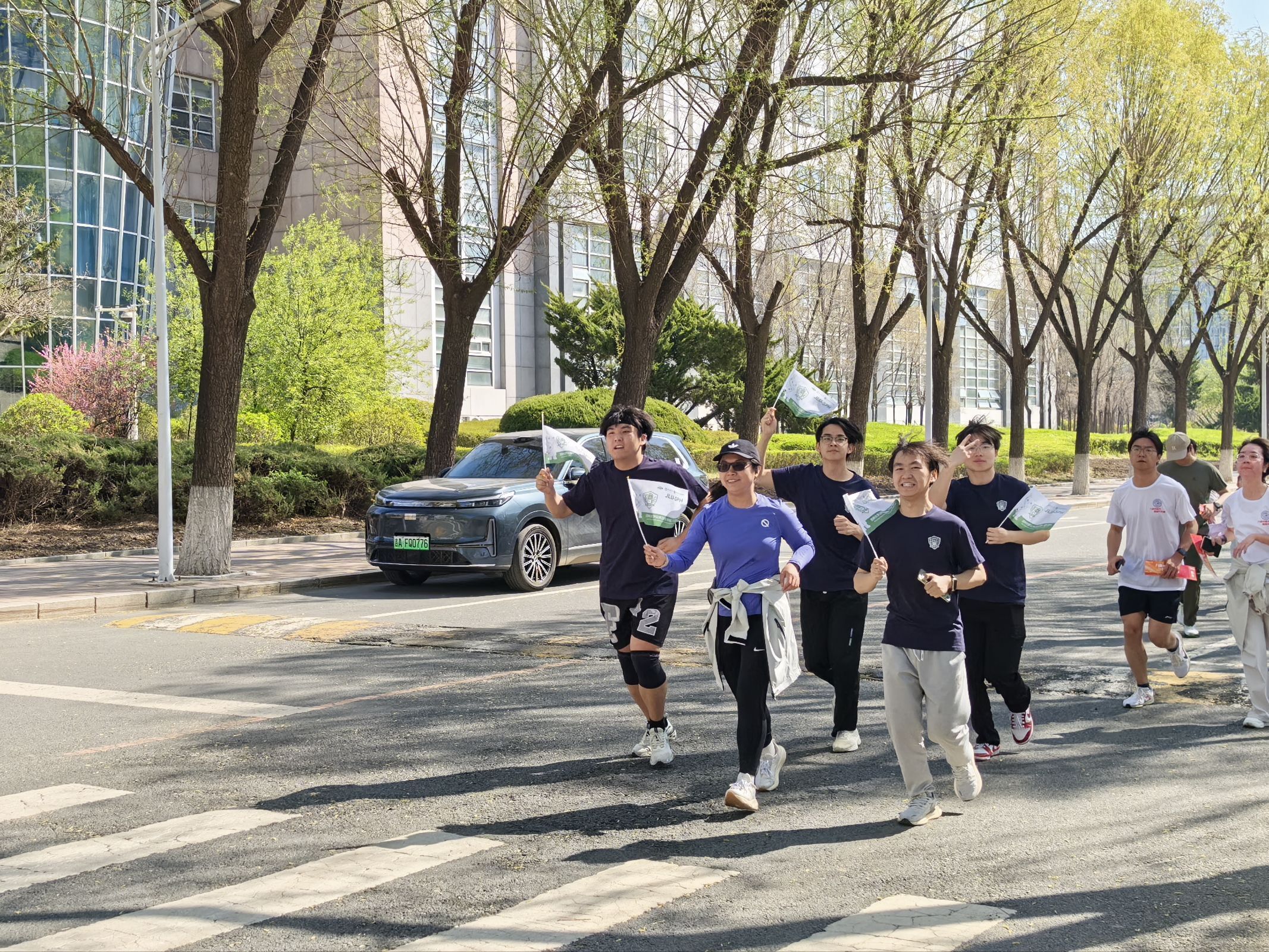
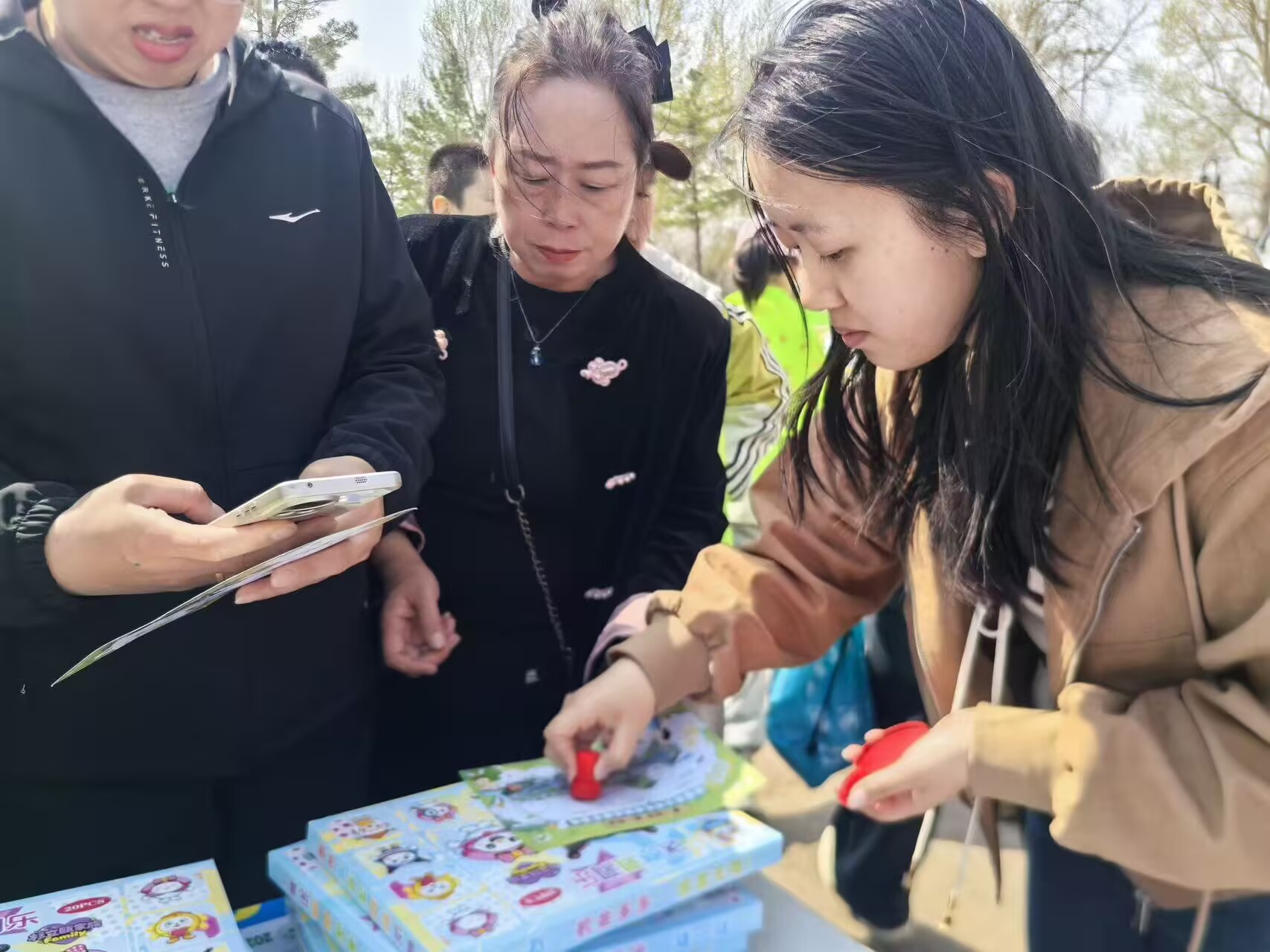
The campus health run connected physical activity with respiratory-health education. At an interaction point along the event, the team used a short survey and one-to-one conversation to collect perspectives from young adults on post-exercise breathing discomfort, family protection, and convenient testing.
The activity showed that public-health education can enter settings people already choose to participate in, rather than being confined to classrooms or lectures. Participants showed strong interest in convenient home testing and family protection, offering a starting point for conversations about how testing and protective practices are evaluated in everyday life.
Science outreach at the Apricot Blossom Cultural Festival4 photos · Click to enlarge
B12Curiosity in motion
Public audiences: synthetic-biology booth at the Apricot Blossom Cultural Festival
April 19, Jilin University Nanling Campus
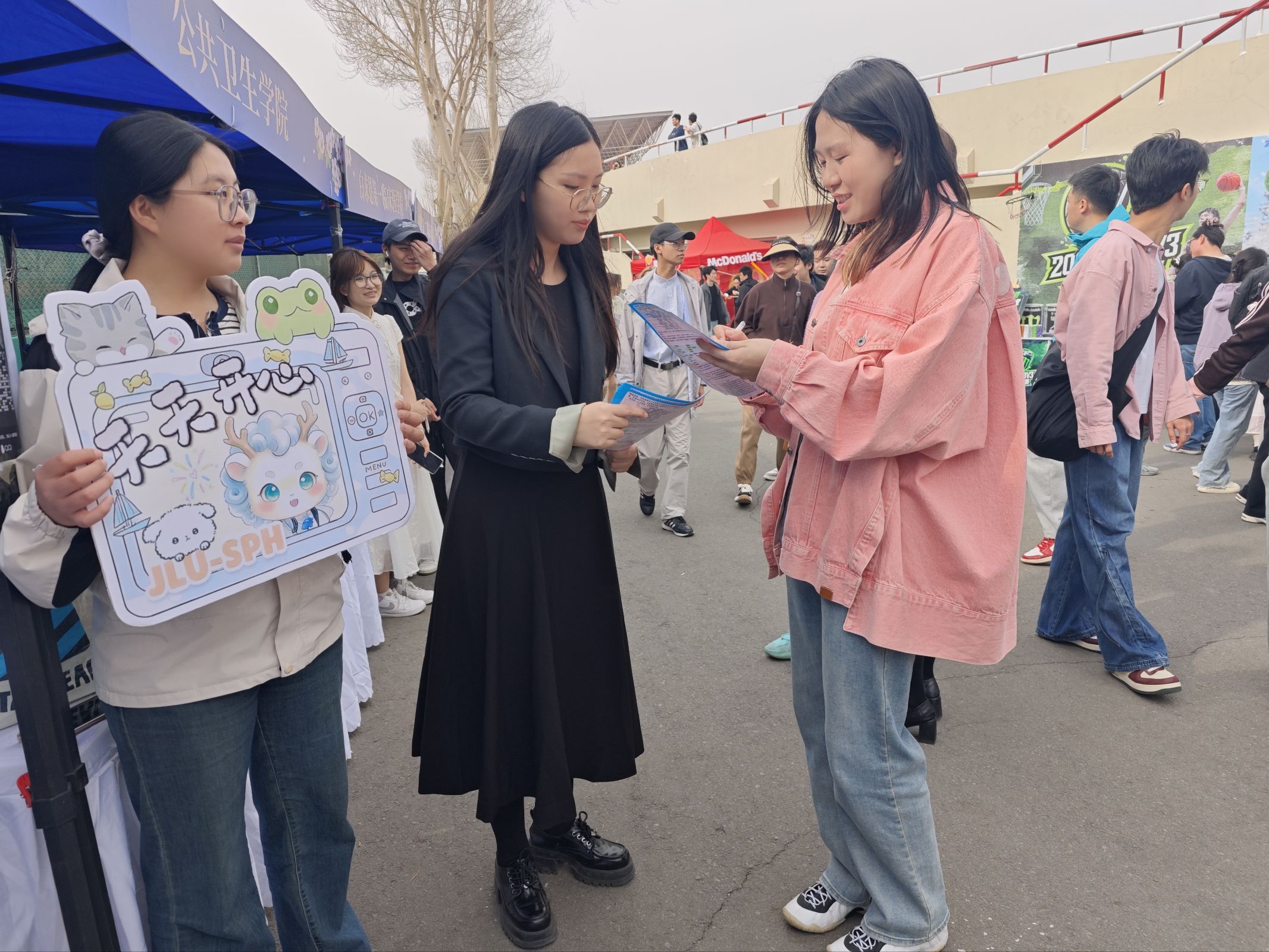
At the Apricot Blossom Cultural Festival, we brought synthetic biology into a public space shaped by culture, social interaction, and open conversation. Visual displays, portable materials, and explanations at different levels of depth allowed university students, families, older adults, and other visitors to enter the conversation through their own experiences.
Nearly one hundred students, staff members, and visitors stopped to exchange ideas according to the activity record. This mixed-audience setting reinforced the need for clear, measured explanations: communication should introduce the possibilities of synthetic biology while also distinguishing research, validation, and real-world application.
Public participation in detection-choice voting3 photos · Click to enlarge
B13Curiosity in motion
Public audiences: Grassland Music Festival detection-choice voting interaction
May 16, Jilin University Xinmin Campus
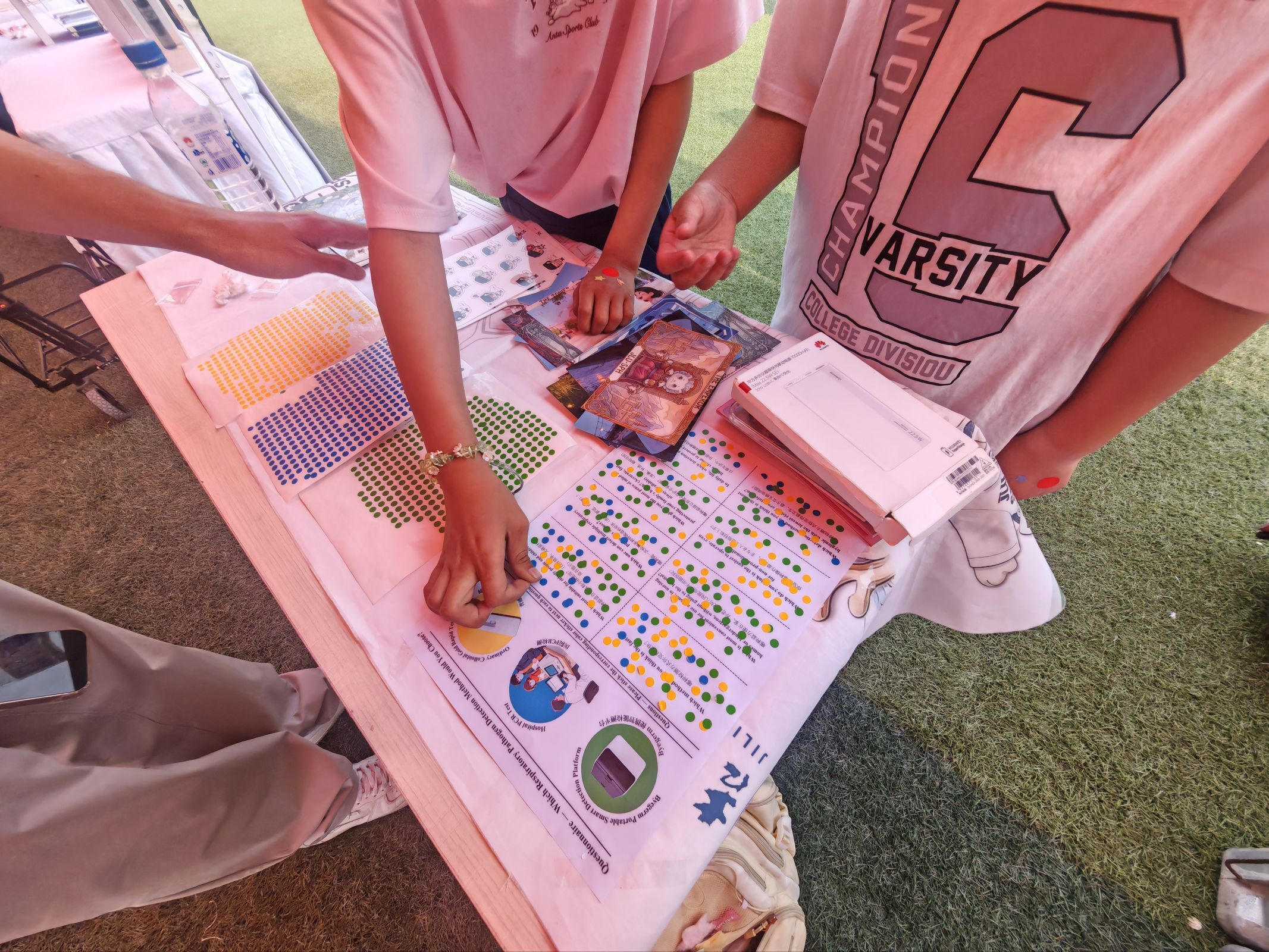
At the Grassland Music Festival, an interactive voting board asked participants how they would weigh different detection approaches in different settings. Voting and conversation introduced considerations such as time, accuracy, operational complexity, cost, privacy, and household use.
The purpose was not to demonstrate that one choice was universally “best.” It was to make different priorities visible and discussable. Some participants emphasized speed, others accuracy, and others cost. The activity illustrated that a technology’s public value depends not only on laboratory performance, but also on how people understand, accept, and use it in everyday contexts.
In developmentB14
B14Curiosity in motion
Public audiences: Gene Wars game-based synthetic-biology outreach initiative
In development
Gene Wars is a non-commercial student outreach initiative, co-conceived by JLU-SPH iGEM and Tsinghua-A iGEM, that uses strategy-game language to introduce concepts such as CRISPR, RNA interference, antimicrobial resistance, and biofilms. It is inspired by the strategic logic of classic tower-defense games, not intended as a commercial derivative product.
The initiative treats game mechanics as bounded analogies. Each fictional mechanism must answer two questions: What scientific idea does it help a learner approach? And where does the analogy depart from real biology? The initiative remains in development and is presented here as a design exploration rather than as an implemented or evaluated outreach activity.
06
Part III · Diversity Partners
Making science communication accessible to different participants
Science communication is not a matter of saying the same thing to everyone in the same environment. Diversity Partners focuses on people who may have fewer opportunities to enter science education because of sensory, communication, social-participation, or information-access barriers. We worked with teachers, parents, volunteers, and participants to adjust activity pace, material texture, instruction length, and interaction methods so that science learning could take place in more supportive environments.
Shared making and conversation through lacquer-fan outreach4 photos · Click to enlarge
D01Access by design
Children in special-education settings: lacquer-fan supported outreach
March 11, Yulong Special Education School
This activity combined intangible-cultural-heritage lacquer-fan making with expression around life science. Participants used color, pattern, and the rhythm of craft to create their own work while encountering themes of health, life, and scientific imagination.
Before the activity, the team consulted special-education teachers and learned approaches to accompaniment and emotional support. During the session, we reduced noise and bright light, used one-to-one support for signing, drawing, and marbling, and introduced basic protective practices such as handwashing and ventilation through short, clear language. Teachers described the low-stimulation, craft-based approach as well suited to the participating children; some children voluntarily displayed their work and shared their ideas.
Inclusive outdoor learning and shared exploration3 photos · Click to enlarge
D02Access by design
Adolescents with additional support needs: inclusive hiking and science activity
April 24, Changchun International Automobile Park
The inclusive hiking activity brought adolescents with additional support needs, volunteers, and peers into a setting of shared movement and mutual support. Segmented tasks, supported conversation, and nature observation enabled participants to engage at their own pace, while science observation was integrated into walking and rest periods.
Together with JLU-NBBMS, we organized medical support, interactive checkpoints, logistical support, and accompaniment roles. Checkpoints used simplified language and game-based tasks to introduce basic protective practices and synthetic-biology concepts. The activity record reports participation by approximately one hundred adolescents with additional support needs. It reinforced a central principle of HEART-Edu Loop: accessibility is not an add-on to education; it is a condition to consider from the beginning.
07
Feedback
Leaving a trace of real feedback
Education is not the final stage of project communication. It is one route through which a project learns from society. Privacy concerns in hospital waiting rooms, communication needs in care institutions, children’s scientific imagination, student attention to user needs, public trade-offs in voting activities, and differing requirements for pace and environment all remind us that a health-related synthetic-biology project must ask whether a technology is understandable, accessible, and worthy of trust—and who has the opportunity to participate in shaping its future.
This reflection is central to HEART-Edu Loop. We will continue to document perspectives from different communities and bring them into the revision of educational materials, project communication, and Human Practices discussion. Science does not become public knowledge simply because it has been explained once. It must be retold, examined, and shaped across people’s questions, experiences, and values.
Signals from the field
What returned to the next design round
3 / 5
Care setting
Fit the format to limited time and privacy
Waiting-room questions reinforced the need for concise, optional, self-paced communication.
Young learners
Creation makes understanding visible
Children’s models and explanations showed where protective ideas had become tangible—and where prompts could improve.
Training teams
Measure recognition, then refine the scenario
Pre/post checks turned staff questions into clearer scenario-based guidance for future sessions.
Student creators
User needs belong inside technical imagination
Design work brought usability for younger children and older adults into the scientific conversation.
Public choices
Trade-offs should be discussable
Voting made different priorities—speed, accuracy, cost, privacy, and convenience—visible without declaring one universal answer.
08
Open resources and reuse
Let an activity become someone else’s starting point
The materials developed across HEART-Edu Loop include health-communication resources for parents of infants and expectant mothers; training materials for care settings; children’s stories, movement activities, and craft materials; visual-storytelling and design tools for middle-school students; quiz, career, and homecoming-outreach frameworks for high-school students; interactive and voting formats for university and public settings; and low-stimulation, supported activity flows for diverse participants.
We understand reuse not as simple duplication but as adaptation. In a new setting, each material should be reconsidered in relation to its audience, scientific accuracy, language level, accessibility, privacy protection, and the role of partner organizations. By sharing activity plans, teaching materials, interaction templates, and guidance for use, we aim to make these experiences useful starting points for future iGEM teams, teachers, community organizations, and young science communicators.
Open resource collection
Adaptable formats, documented boundaries
Collection in progress
01 · Care
Care communication
Leaflets, audio, large-print materials, and scenario-based guidance.
Infant-care explainers
Care-setting mini-class
Large-print prompts
02 · Create
Creative learning
Stories, movement activities, clay models, drawing, and visual narratives.
Age-adapted stories
Making activities
Visual storytelling
03 · Participate
Participation formats
Question banks, voting boards, design templates, and supported activity flows.
Quiz and question banks
Voting interactions
Design canvases
04 · Access
Accessibility flows
Low-stimulation pacing, supported conversation, and adaptable activity sequences.
Facilitator checklists
Supported instructions
Adaptation notes
The final downloadable bundle will be added after materials are reviewed for scientific accuracy, accessibility, privacy, and permission to share.
HEART-Edu Loop does not treat education as the delivery of correct answers from a laboratory to the public. Our work begins with real questions in different settings and continues to change through questions, participant-created work, concerns, and suggestions. For us, the value of education is not only that more people hear about synthetic biology. It is that more people have the opportunity to understand it, question it, express their expectations of it, and participate in shaping a more accessible and responsible scientific future.
From a new parent’s question to a child explaining a clay model; from a caregiver’s uncertainty in a real care scenario to students weighing different detection approaches; from a special-education teacher’s advice on activity pacing to public concerns about cost, privacy, and convenience—each form of feedback belongs to the loop. We will continue to use traceable documentation, reusable tools, and open dialogue to make education a long-term connection between science, care, and society.
Scientific sources supplied with the Education materials
Hu B, Guo H, Zhou P, et al. Characteristics of SARS-CoV-2 and COVID-19. Nature Reviews Microbiology, 2021.
Comprehensive Review of COVID-19: Epidemiology, Pathogenesis, Advancement in Diagnostic and Detection Techniques, and Post-Pandemic Treatment Strategies.
Human Metapneumovirus: A Review of Its Epidemiology, Clinical Features, Public Health Implications and Treatment Options.
Respiratory Syncytial Virus: A Narrative Review of Updates and Recent Advances in Epidemiology, Pathogenesis, Diagnosis, Management and Prevention.
Human Influenza Epidemiology.
Epidemiological characteristics and antibiotic resistance mechanisms of Streptococcus pneumoniae: An updated review.
 Follow the loop